

05.
Dal repertorio al progetto
From source material to design
Scopri tutte le otto piante individuate nei motivi decorativi dei tessuti lucchesi storici e gli altri pattern contemporanei della collezione di Margherita Tofanelli.
Discover all eight plants identified in the decorative motifs of Lucca’s historical textiles, and the other contemporary patterns in Margherita Tofanelli’s collection.
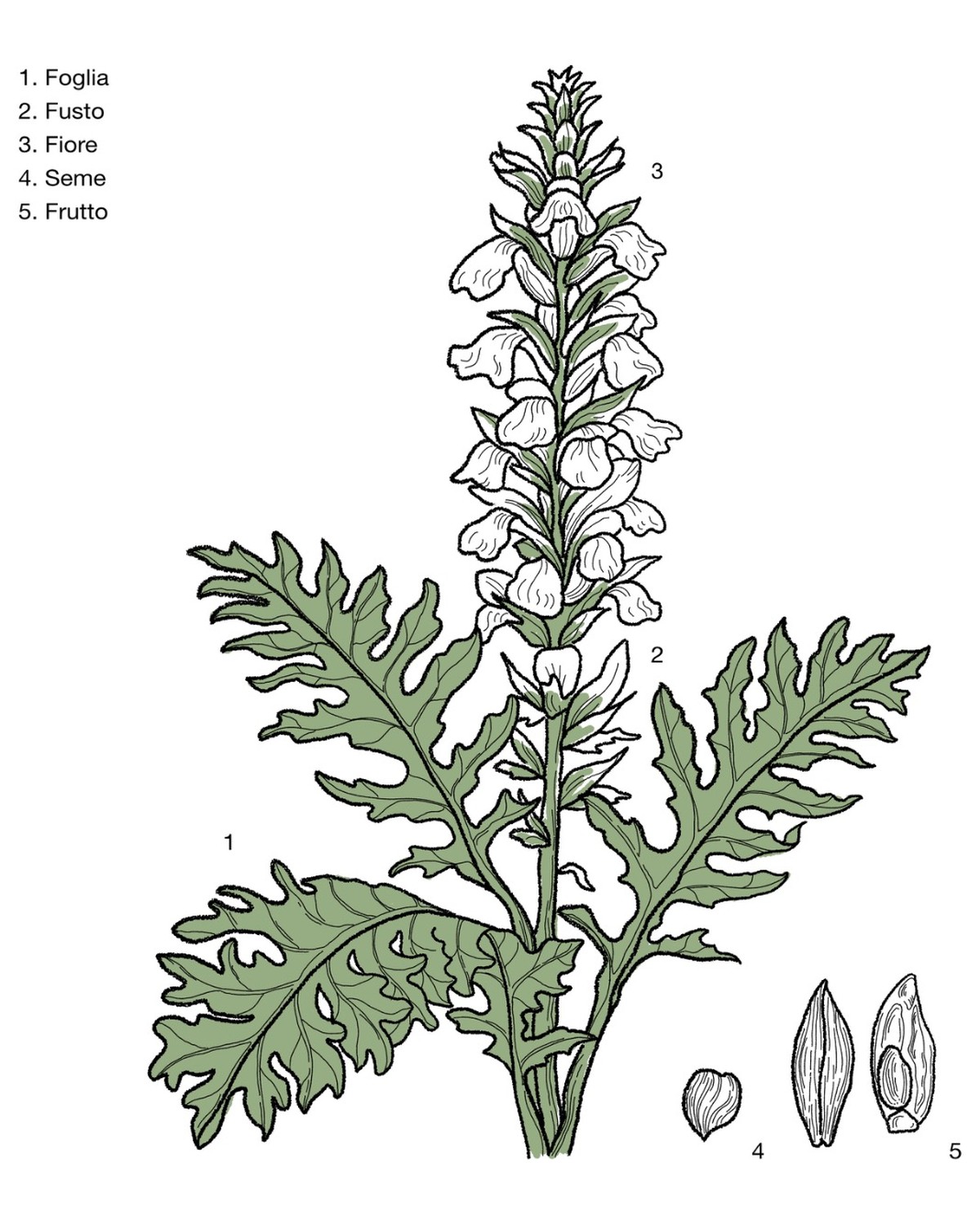
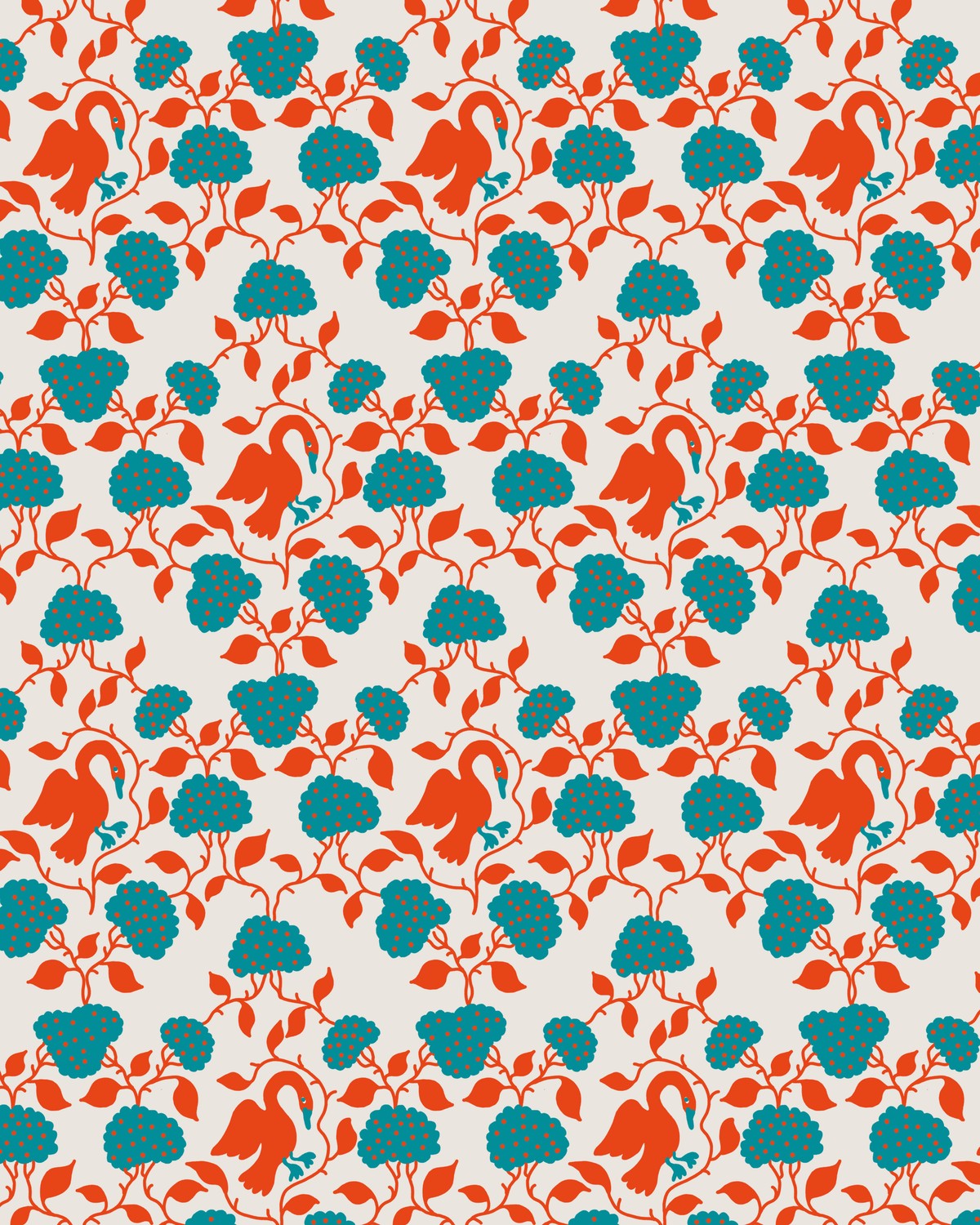
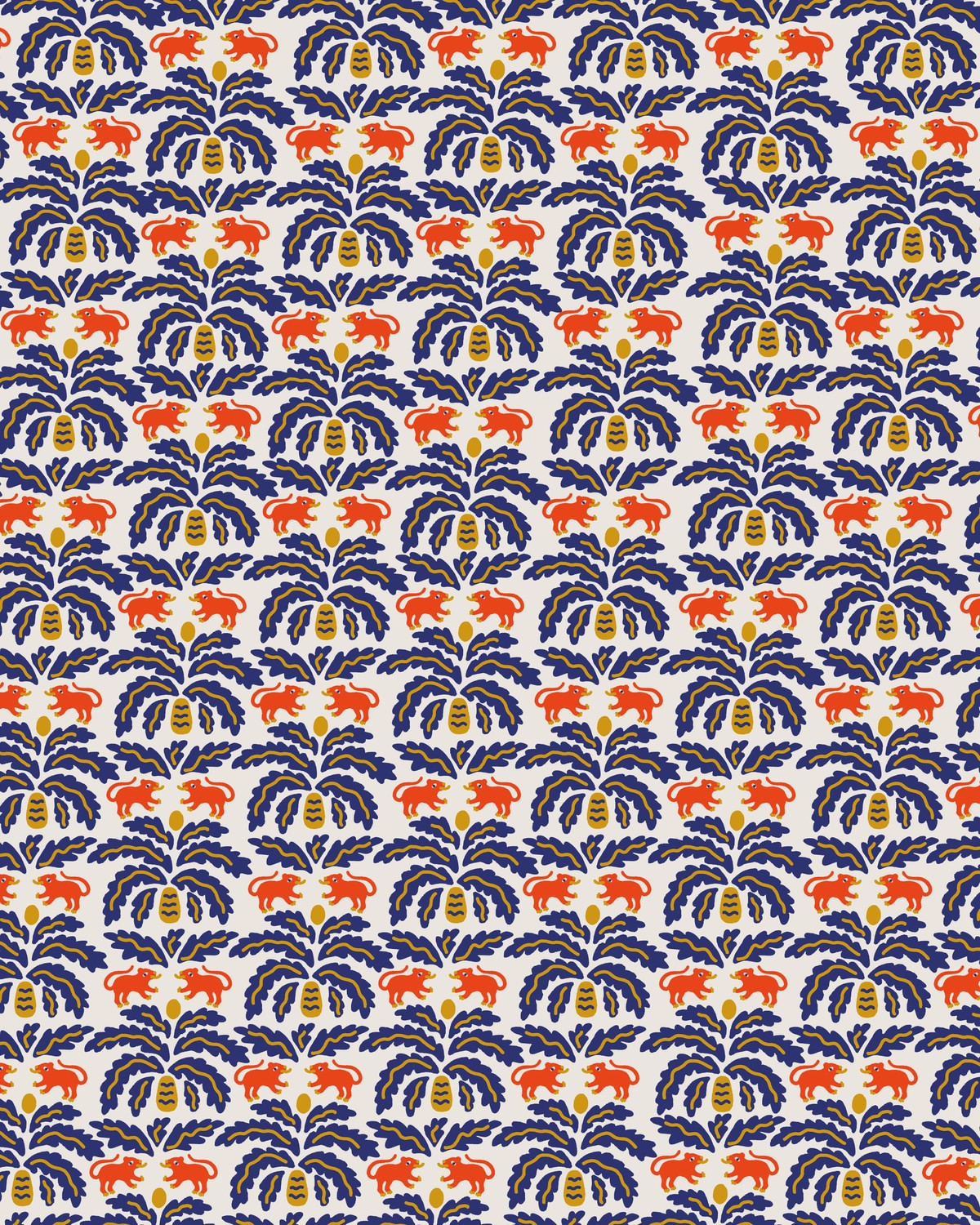
Pianta per eccellenza dell’arte occidentale, simbolo di potere, ricchezza e purezza fin dall’iconografia mediterranea, l’acanto compare nei diaspri lucchesi del XIII e XIV secolo con foglie ampie e frastagliate, che abbracciano la struttura decorativa come i fusti fioriferi fanno in natura.
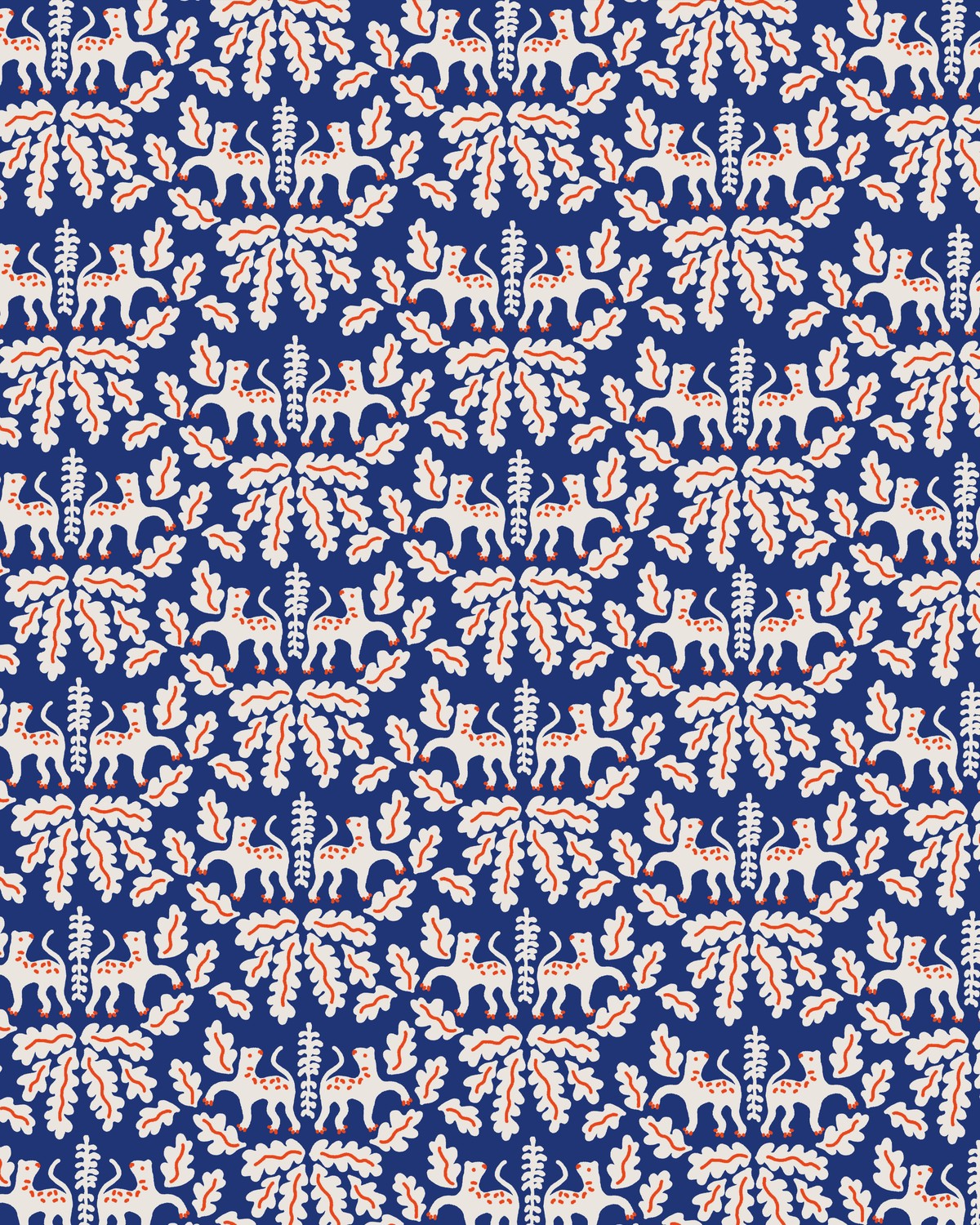
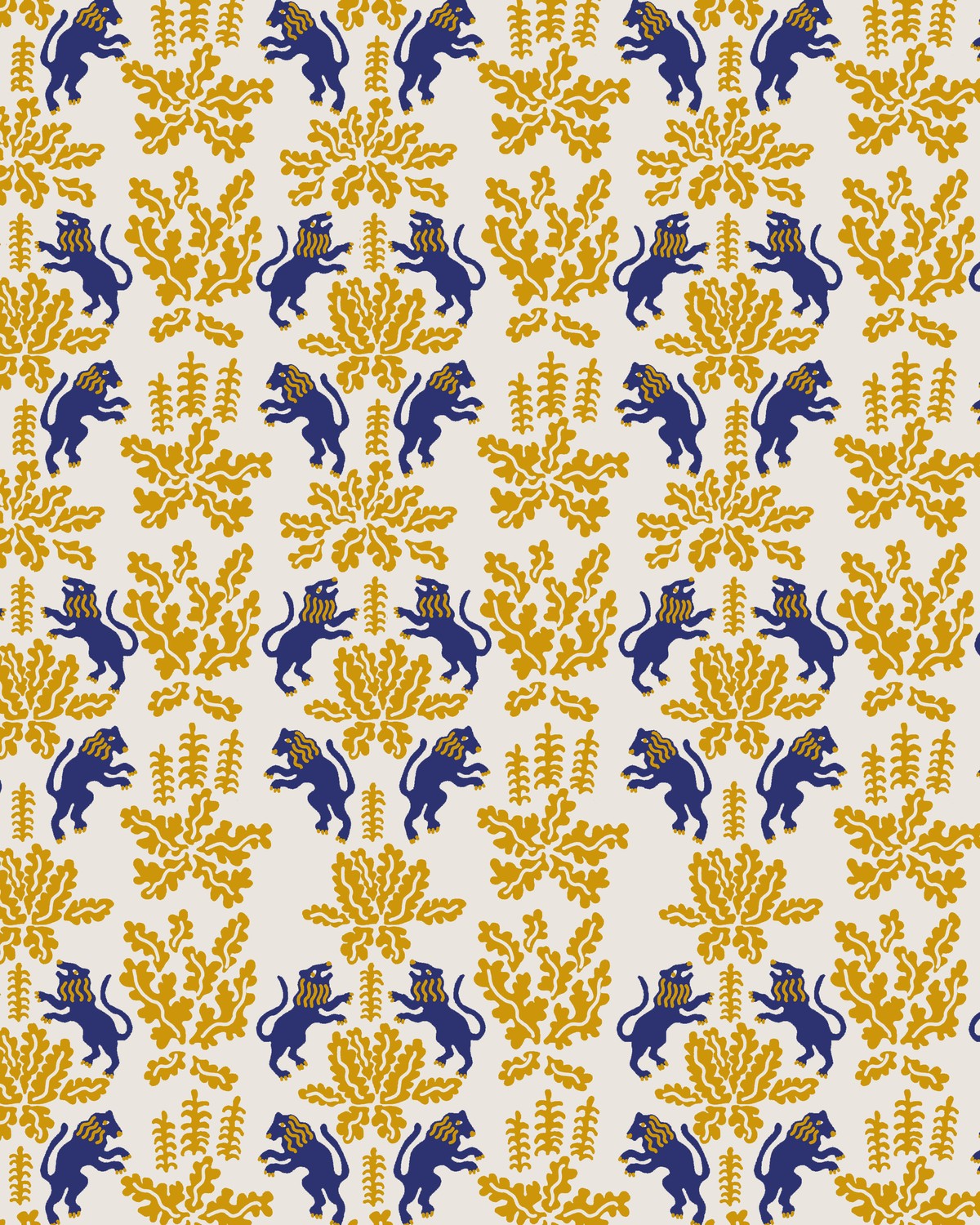
Nel pattern, questo movimento avvolgente viene tradotto in un modulo radiale: le foglie si irradiano da un centro comune, alternate a figure animali araldiche disposte a specchio. La palette, blu e oro su fondo avorio (o, nella variante, avorio e corallo su fondo blu), richiama la preziosità dei diaspri originari, mentre la scansione regolare della composizione ne restituisce il ritmo modulare.
The quintessential plant of Western art, a symbol of power, wealth and purity since Mediterranean iconography, acanthus appears in Lucca’s diapers of the 13th and 14th centuries with broad, jagged leaves that embrace the decorative structure just as flowering stems do in nature.
In the pattern, this enveloping movement is translated into a radial module: the leaves radiate from a common centre, alternating with heraldic animal figures arranged in mirror symmetry. The palette, blue and gold on an ivory ground (or, in the alternative version, ivory and coral on a blue ground), recalls the preciousness of the original diapers, while the regular scansion of the composition conveys its modular rhythm.
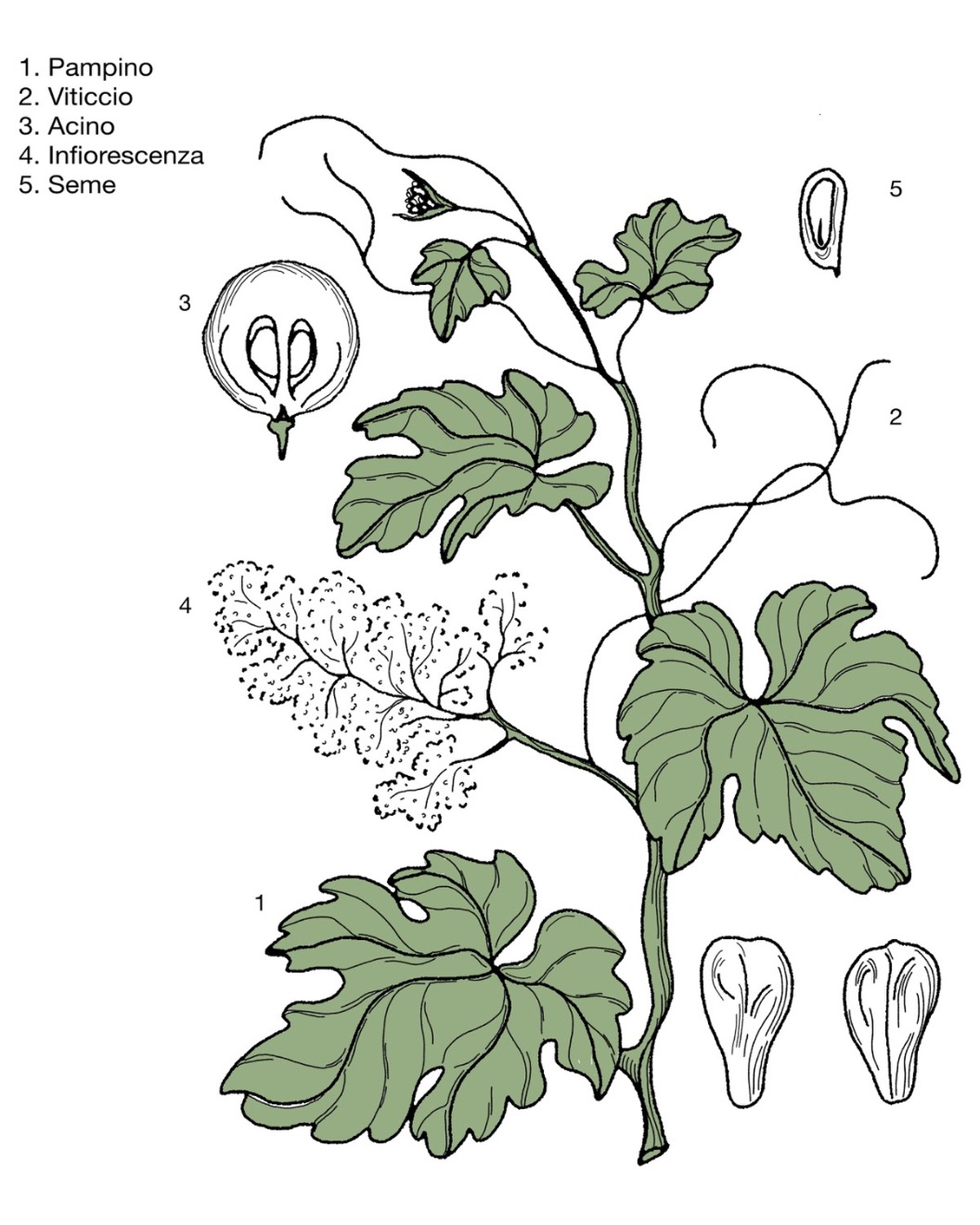
Pianta dal simbolismo antico e stratificato: dal mito di Dioniso al simbolismo cristiano, dalla vendemmia come rito sacro alla foglia come emblema di fertilità e abbondanza, ogni cultura del bacino mediterraneo l’ha fatta propria. Nei tessuti lucchesi medievali si riconosce nella foglia palmata, nei tralci sinuosi e nei grappoli che si incastrano nella trama fitta del tessuto.
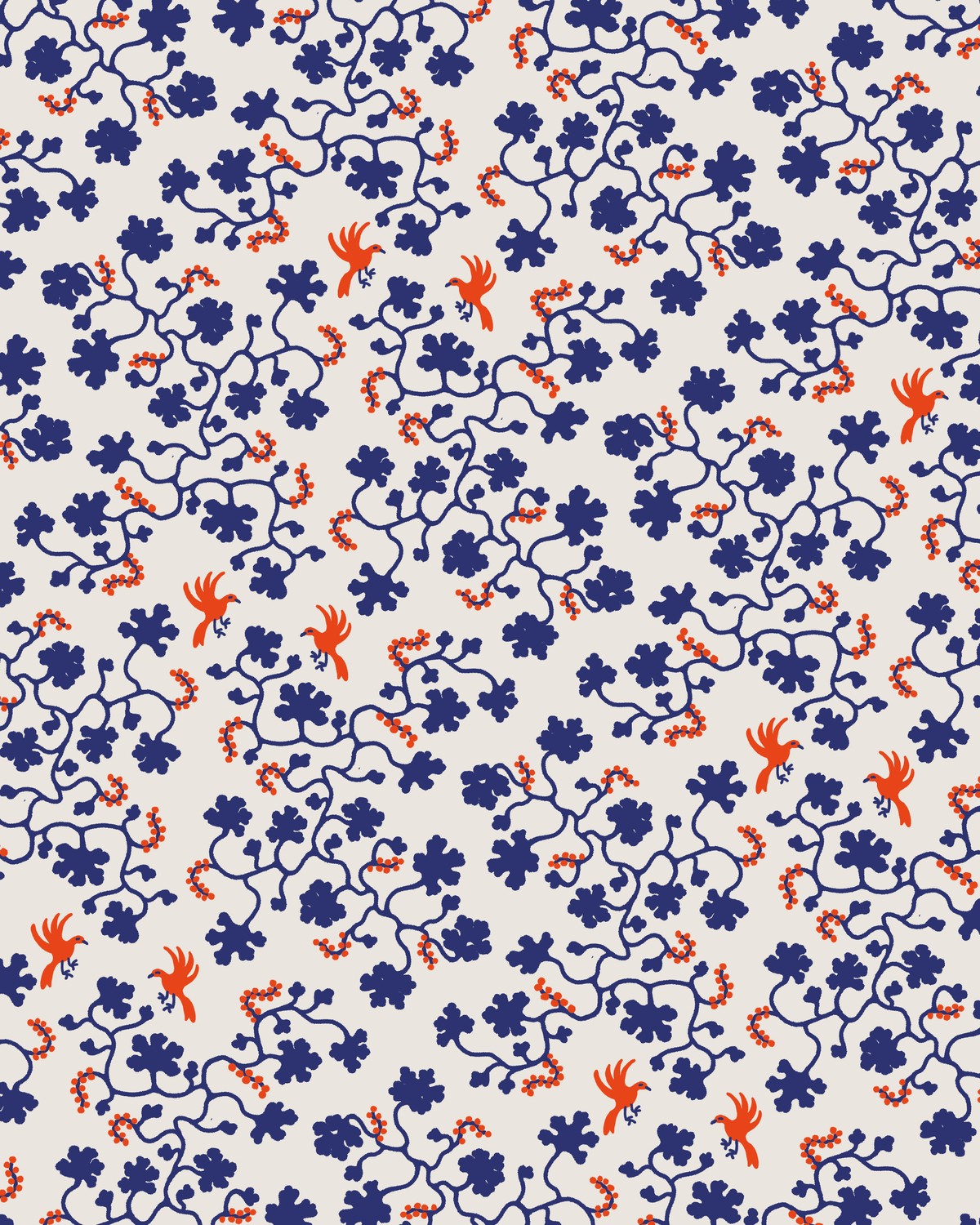
Nel pattern, questo intreccio si traduce in una composizione continua e senza gerarchie: i tralci si diramano liberamente sulla superficie, punteggiati da piccoli fiori e da uccelli che si posano tra le foglie, secondo una densità e un ritmo minuto che richiamano da vicino la trama ricca dei Lampassi a piccoli motivi. La palette gioca sul contrasto cromatico restituendo la stessa sensazione di brulicante vitalità che si ritrova nel tessuto originale.
A plant of ancient, layered symbolism: from the myth of Dionysus to Christian symbolism, from the grape harvest as a sacred rite to the leaf as an emblem of fertility and abundance, every culture of the Mediterranean basin has made it its own. In Lucca’s medieval textiles it appears in the palmate leaf, the sinuous tendrils and the clusters that interlock within the dense weave of the fabric.
In the pattern, this interweaving is translated into a continuous, non-hierarchical composition: the tendrils branch freely across the surface, punctuated by small flowers and birds perched among the leaves, in a density and fine rhythm that closely recall the rich texture of the small-motif lampas. The palette plays on chromatic contrast, conveying the same sense of teeming vitality found in the original textile.
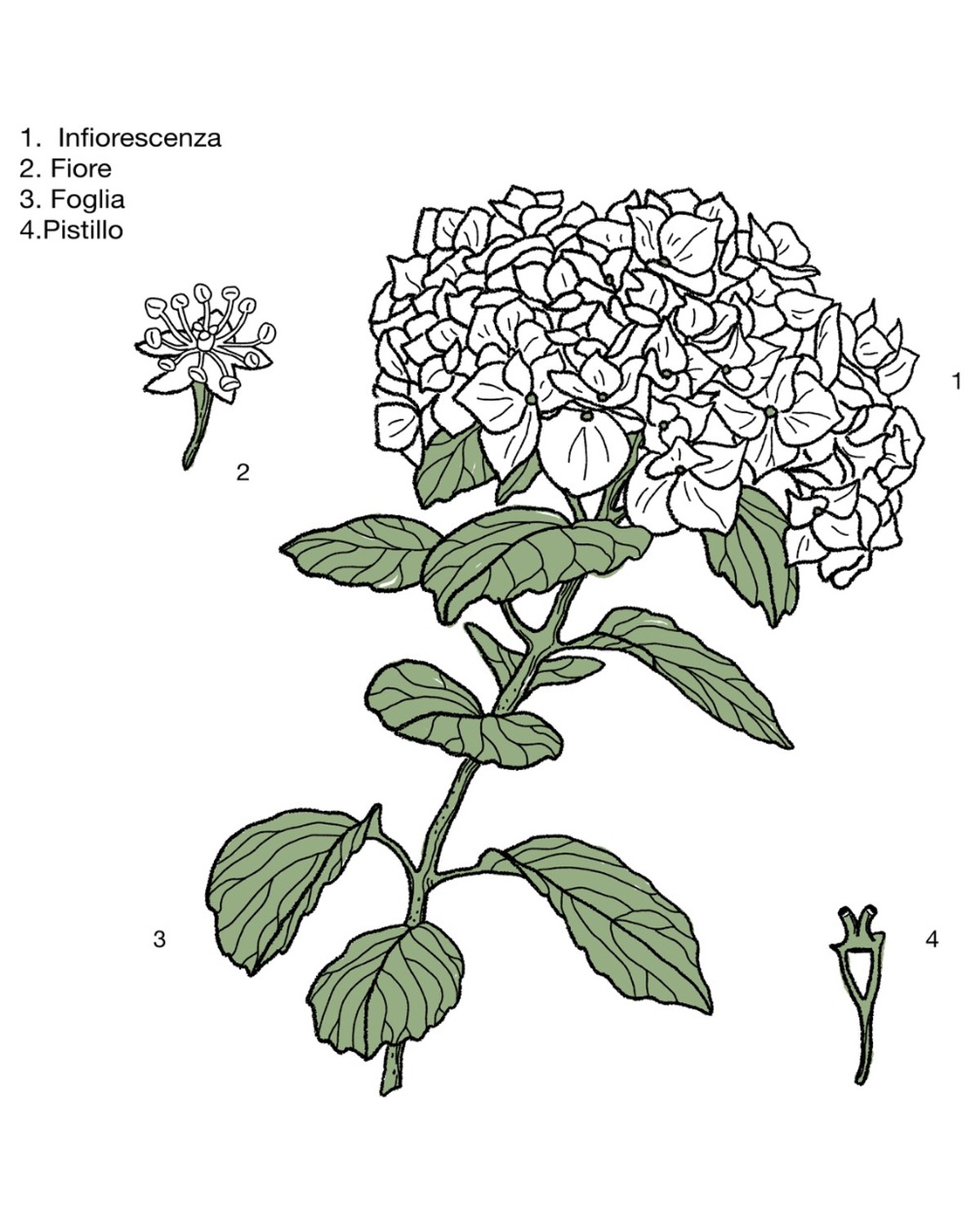
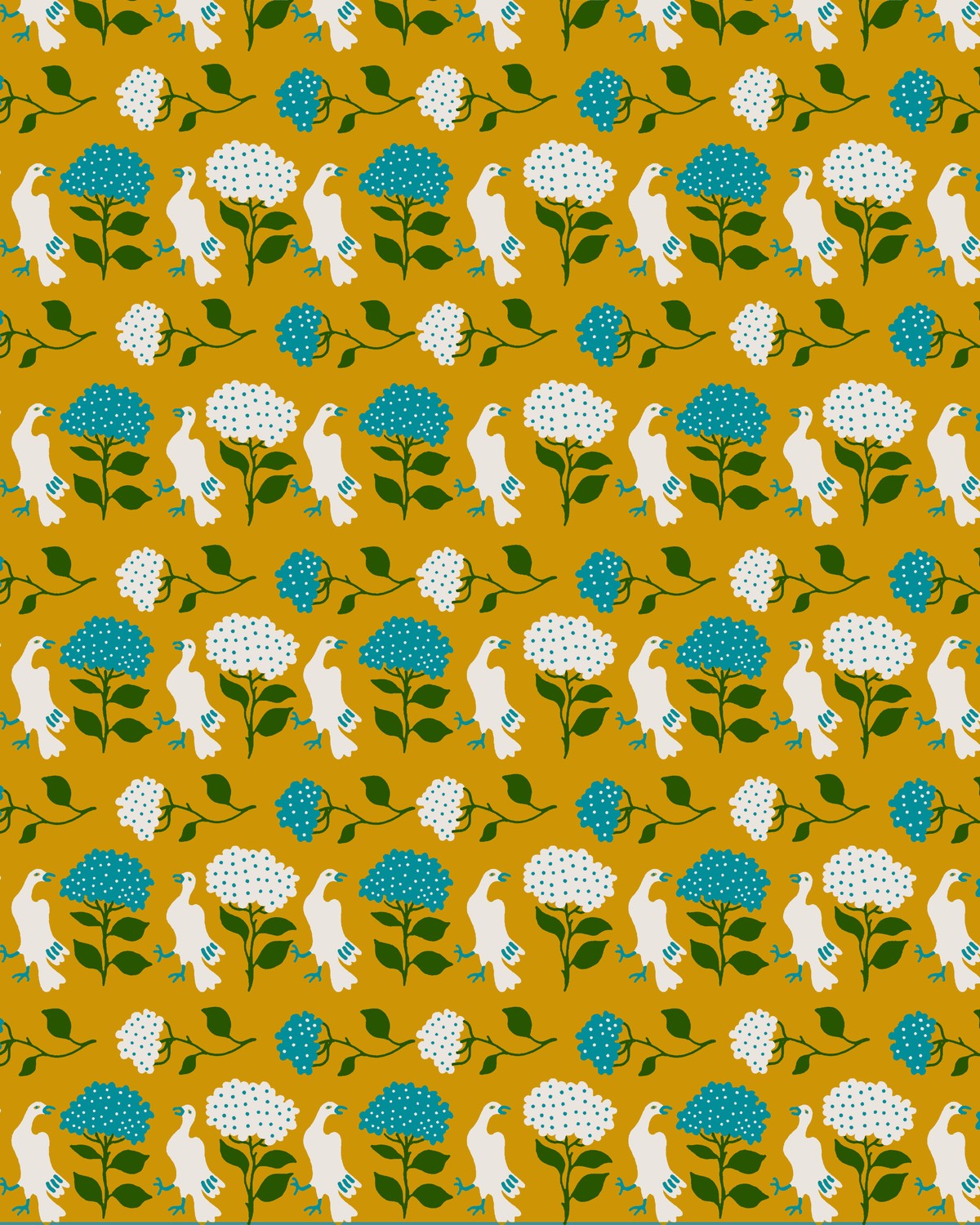
Sconosciuta nell’Italia medievale, l’ortensia compare comunque nelle sete lucchesi del tardo XIV secolo, copiata dai preziosi tessuti orientali giunti dall’Estremo Oriente, dove da secoli era simbolo di gratitudine e sincerità. Gli artigiani lucchesi ne adottarono la forma tondeggiante e luminosa senza conoscerne il nome, attratti dalla sua sola bellezza.
Nel pattern, l’infiorescenza torna protagonista assoluta della composizione: la forma sferica resa come un bouquet compatto di piccoli petali, domina la scena e guida lo sguardo, mentre gli uccelli si inseriscono negli spazi liberi come presenza secondaria. Il risultato è una composizione a fasce orizzontali, più ordinata e architettonica rispetto all’intreccio libero della Vite: un ritmo scandito che restituisce, in chiave contemporanea, la stessa fascinazione per la forma piena e luminosa che colpì gli artigiani lucchesi del Trecento.
Unknown in medieval Italy, the hydrangea nonetheless appears in Lucca’s silks of the late 14th century, copied from the precious Eastern textiles arriving from the Far East, where for centuries it had been a symbol of gratitude and sincerity. Lucca’s artisans adopted its round, luminous form without knowing its name, drawn to its beauty alone.
In the pattern, the inflorescence returns as the absolute protagonist of the composition: the spherical form, rendered as a compact bouquet of small petals, dominates the scene and guides the eye, while the birds occupy the open spaces as a secondary presence. The result is a composition in horizontal bands, more ordered and architectural than the free interweaving of the Vine: a measured rhythm that renders, in a contemporary key, the same fascination with full, luminous form that struck Lucca’s artisans in the 14th century.
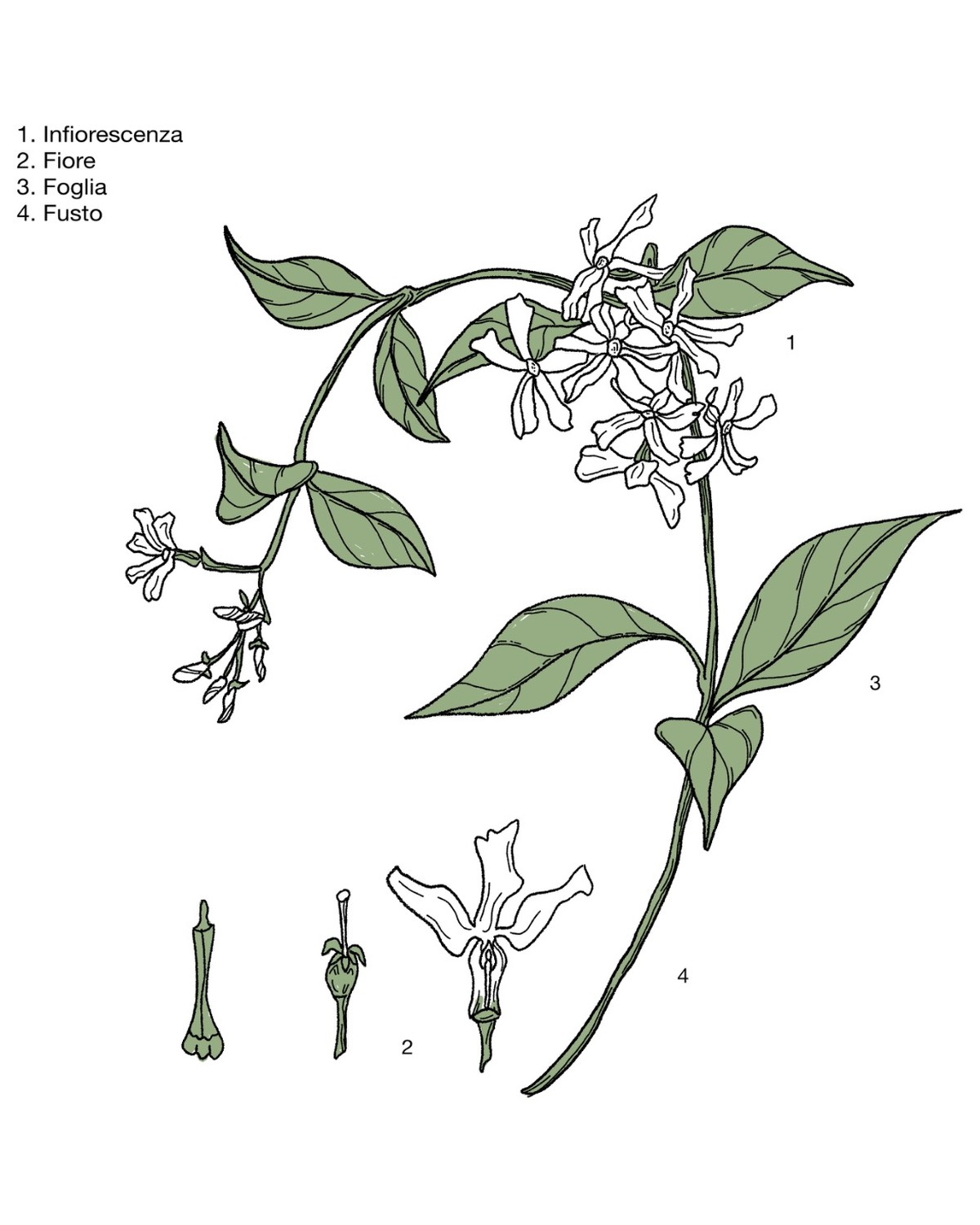
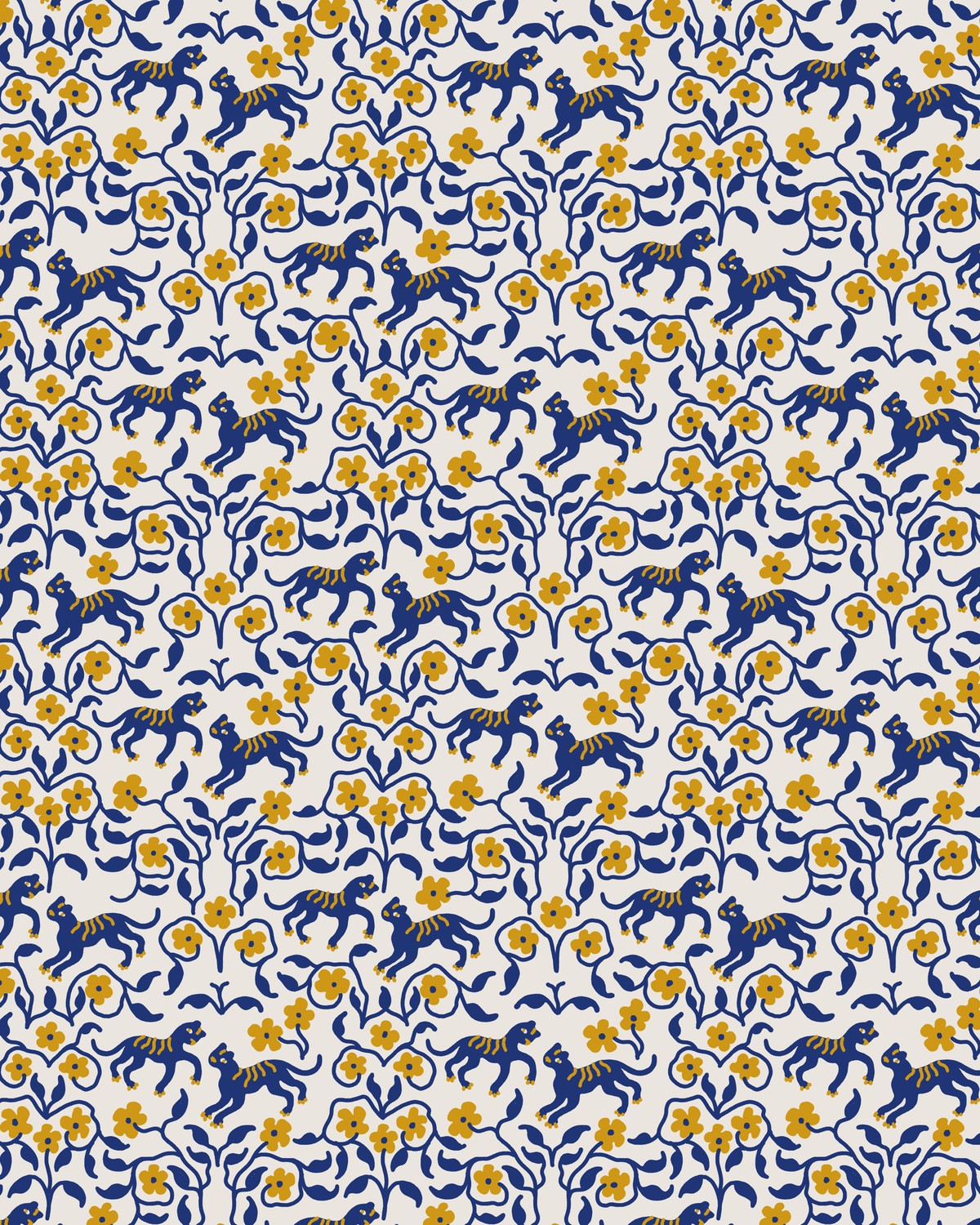
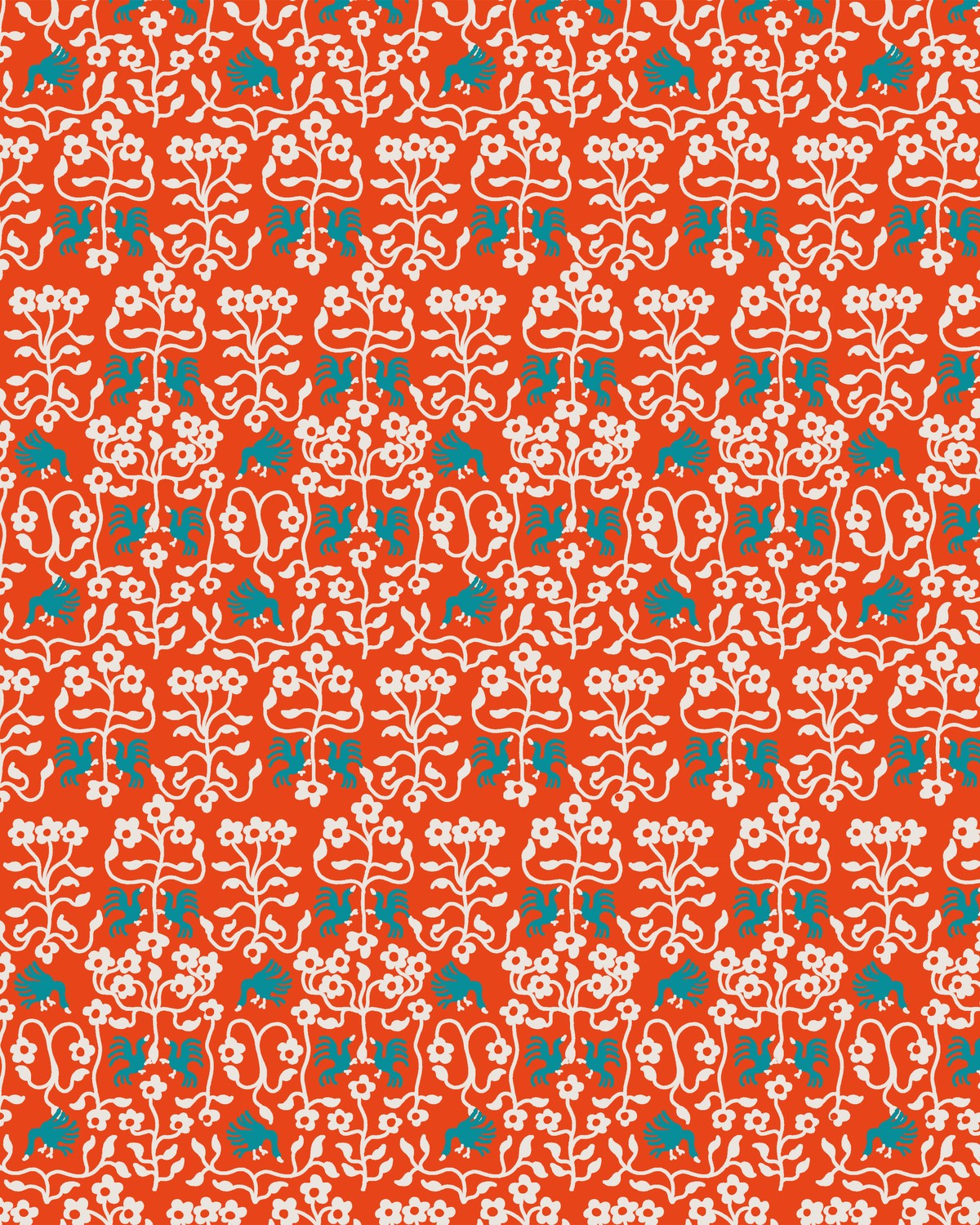
Sconosciuto nell’Italia medievale, il gelsomino arriva nei tessuti lucchesi come reinterpretazione di stoffe orientali di importazione. In Oriente simboleggia l’amore divino e il candore; la sua piccola corolla a cinque petali è riconoscibile nei lampassi a piccoli motivi dell’inizio 1300.
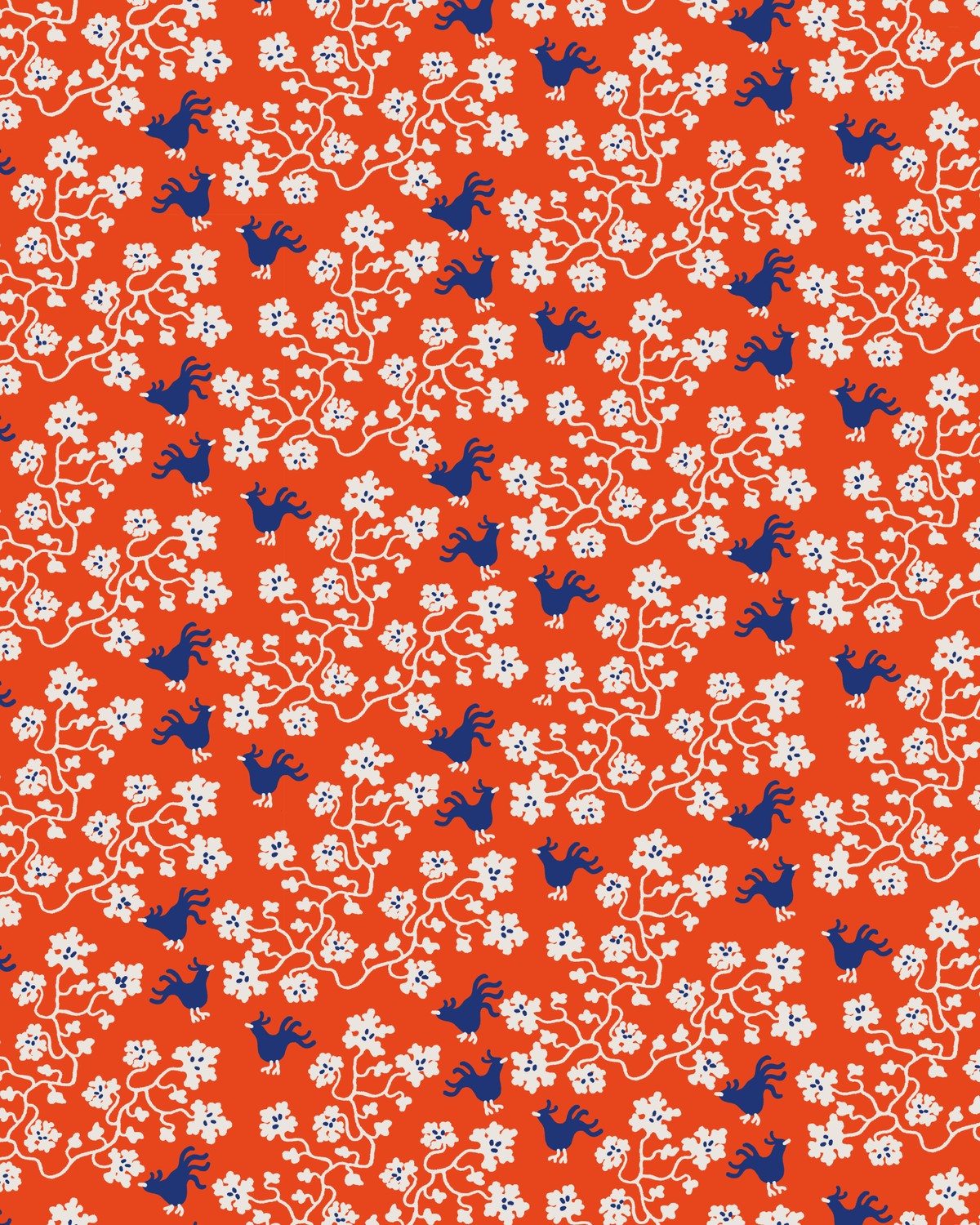
Il soggetto nei pattern della collezione è quella piccola corolla che si moltiplica in una trama fitta e senza gerarchia, intrecciata a tralci sinuosi che si arrampicano sulla superficie. A punteggiare la composizione, tigri araldiche disposte con ritmo regolare, quasi appartenessero allo stesso giardino rampicante. L’equilibrio cromatico tra sfondo e disegno richiama la preziosità dei lampassi a piccoli motivi mentre, la densità della trama ne restituisce il carattere fitto e vibrante. Lo stesso ‘horror vacui’ riconosciuto nella pagina precedente come cifra stilistica di questa tipologia tessile.”
Unknown in medieval Italy, jasmine entered Lucca’s textiles as a reinterpretation of imported Eastern fabrics. In the East it symbolises divine love and purity; its small five-petalled corolla is recognisable in the small-motif lampas of the early 1300s.
The subject in the collection’s patterns is that small corolla, multiplied in a dense, non-hierarchical weave, intertwined with sinuous tendrils climbing across the surface. Punctuating the composition are heraldic tigers arranged at a regular rhythm, as if belonging to the same climbing garden. The chromatic balance between background and design recalls the preciousness of the small-motif lampas, while the density of the weave conveys its dense, vibrant character, the same horror vacui identified on the previous page as the stylistic signature of this textile typology.
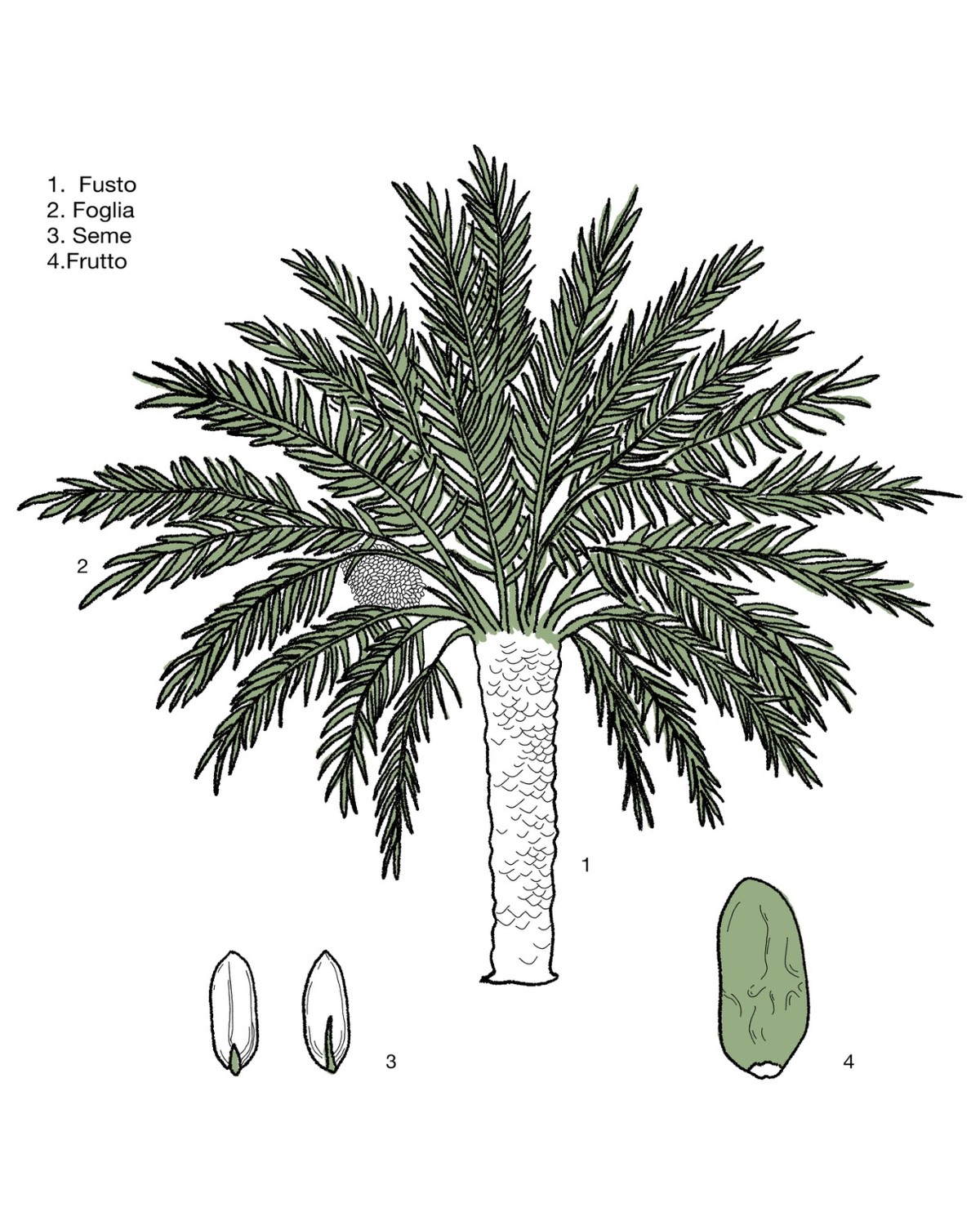
Simbolo di vittoria, pace e resurrezione tra Vicino Oriente, mondo greco-romano e cristianesimo, la palma compare nei tessuti lucchesi più tardi, in composizioni narrative e complesse di chiara ispirazione gotica. (esempio Tessuto a bande orizzontali con fenici, lampasso, seta e filo metallico Lucca, prima metà XIV secolo, Riggisberg, Abegg Stiftung).
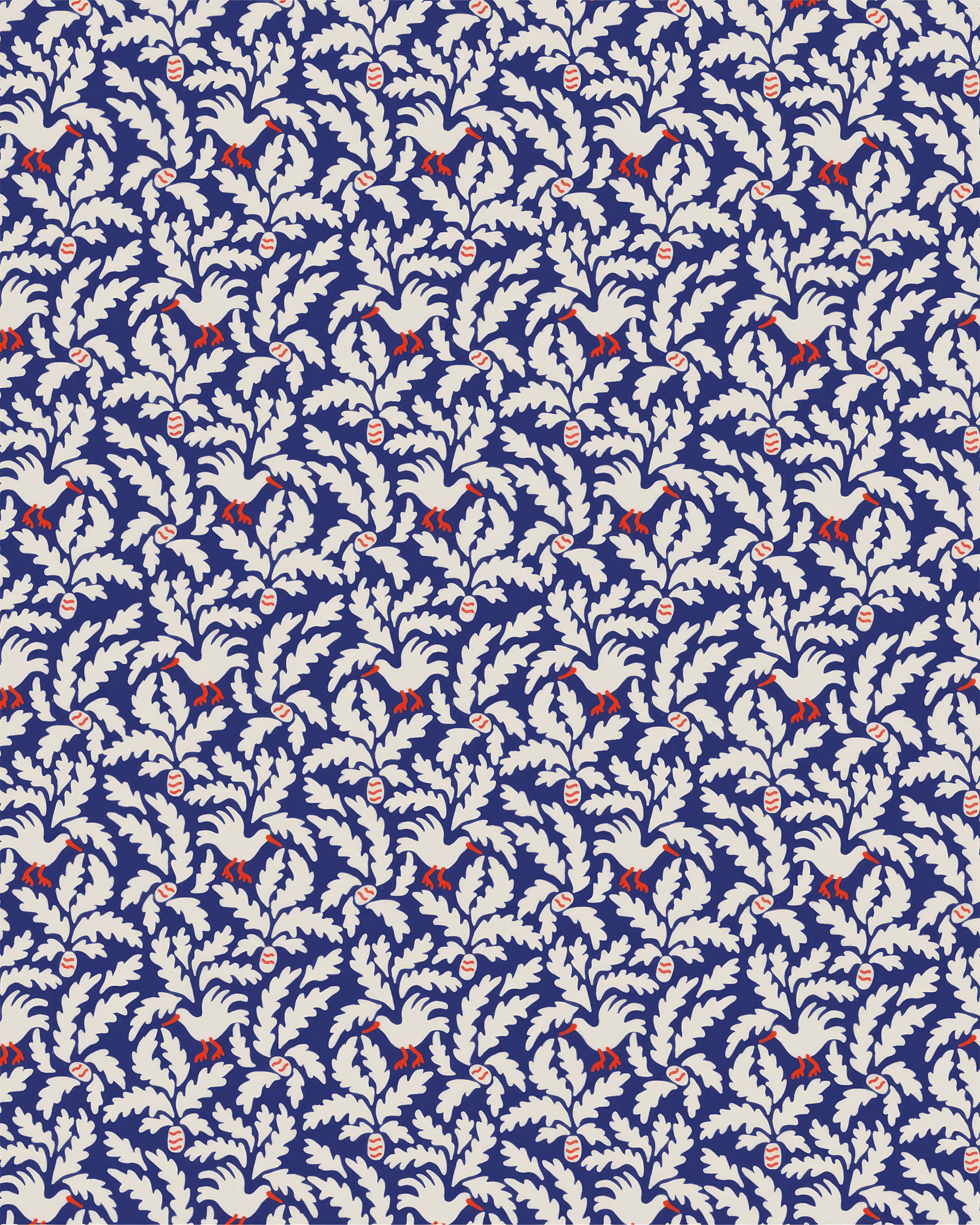
I pattern contemporanei hanno come protagonista un ventaglio di foglie di palma che diventa il modulo verticale e simmetrico: dal fusto centrale le foglie si irradiano a specchio, mentre due figure araldiche affiancano la composizione come guardiani. Nella variante più fitta, lo stesso ventaglio si moltiplica fino a coprire l’intera superficie in un’unica texture di foglie piumate, tra cui si affacciano piccoli uccelli. La palette, arancio e blu notte su fondo avorio (o avorio e blu su fondo blu), restituisce la ricchezza compositiva e il gusto per l’esotico dei tessuti storici attribuiti alle produzioni lucchesi più tarde, vicine, per complessità, ai lampassi a bande orizzontali incontrati nella pagina precedente.
A symbol of victory, peace and resurrection across the Near East, the Greco-Roman world and Christianity, the palm appears in Lucca’s textiles at a later stage, in complex narrative compositions of clear Gothic inspiration. (example: Textile with horizontal bands featuring phoenixes, lampas, silk and metal thread, Lucca, first half of the 14th century, Riggisberg, Abegg-Stiftung).
The contemporary patterns feature a fan of palm leaves as their protagonist, becoming a vertical, symmetrical module: from the central stem the leaves radiate in mirror symmetry, while two heraldic figures flank the composition like guardians. In the denser variant, the same fan multiplies until it covers the entire surface in a single texture of feathered leaves, among which small birds appear. The palette, orange and midnight blue on an ivory ground (or ivory and blue on a blue ground), conveys the compositional richness and taste for the exotic that historical sources attribute to Lucca’s later production, close, in complexity, to the horizontal-band lampas encountered on the previous page.
Conosciuto anche come Stella di Betlemme, questo piccolo fiore a sei petali porta un forte legame con la simbologia cristiana e la geometria sacra. Nei tessuti lucchesi compare soprattutto nei baldacchini tardo-trecenteschi, spesso insieme a elementi architettonici.
La stella a sei petali si sparge sulla superficie del motivo contemporaneo con un ritmo irregolare, quasi vegetale, evocando più un prato fiorito che una griglia geometrica rigida, un contrappunto libero alla “geometria sacra” a cui il fiore è storicamente associato. Ad accompagnarla, creature alate fantastiche bianche su fondo corallo, verdi su fondo avorio che richiamano il repertorio ibrido dei baldacchini da cui il motivo proviene.
Also known as the Star of Bethlehem, this small six-petalled flower carries a strong link to Christian symbolism and sacred geometry. In Lucca’s textiles it appears above all in the late 14th-century canopies, often alongside architectural elements.
The six-petalled star scatters across the surface of the contemporary motif with an irregular, almost vegetal rhythm, evoking a flowering meadow more than a rigid geometric grid, a free counterpoint to the “sacred geometry” with which the flower is historically associated. Accompanying it are fantastical winged creatures, white on a coral ground, green on an ivory ground, recalling the hybrid repertoire of the canopies from which the motif originates.
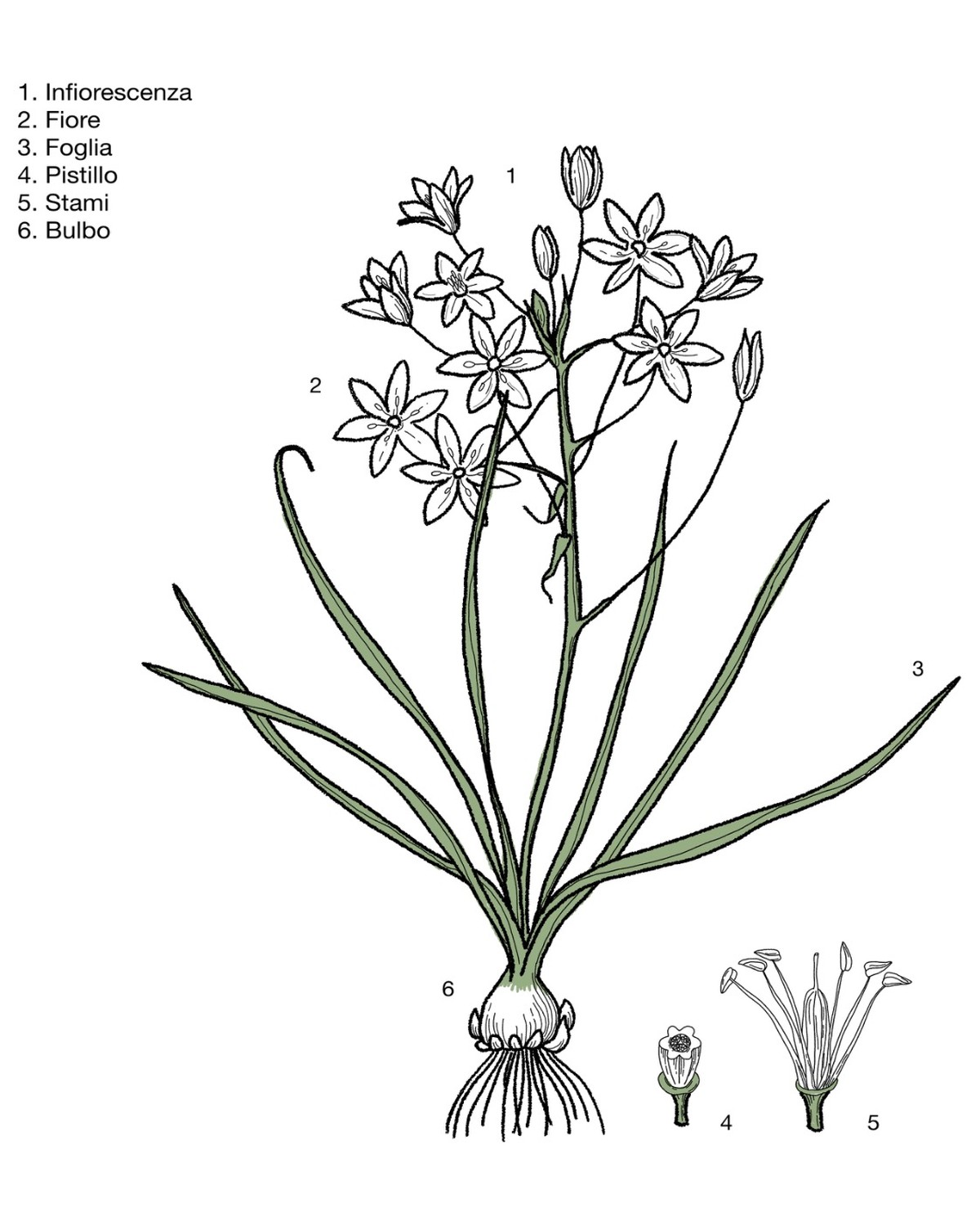
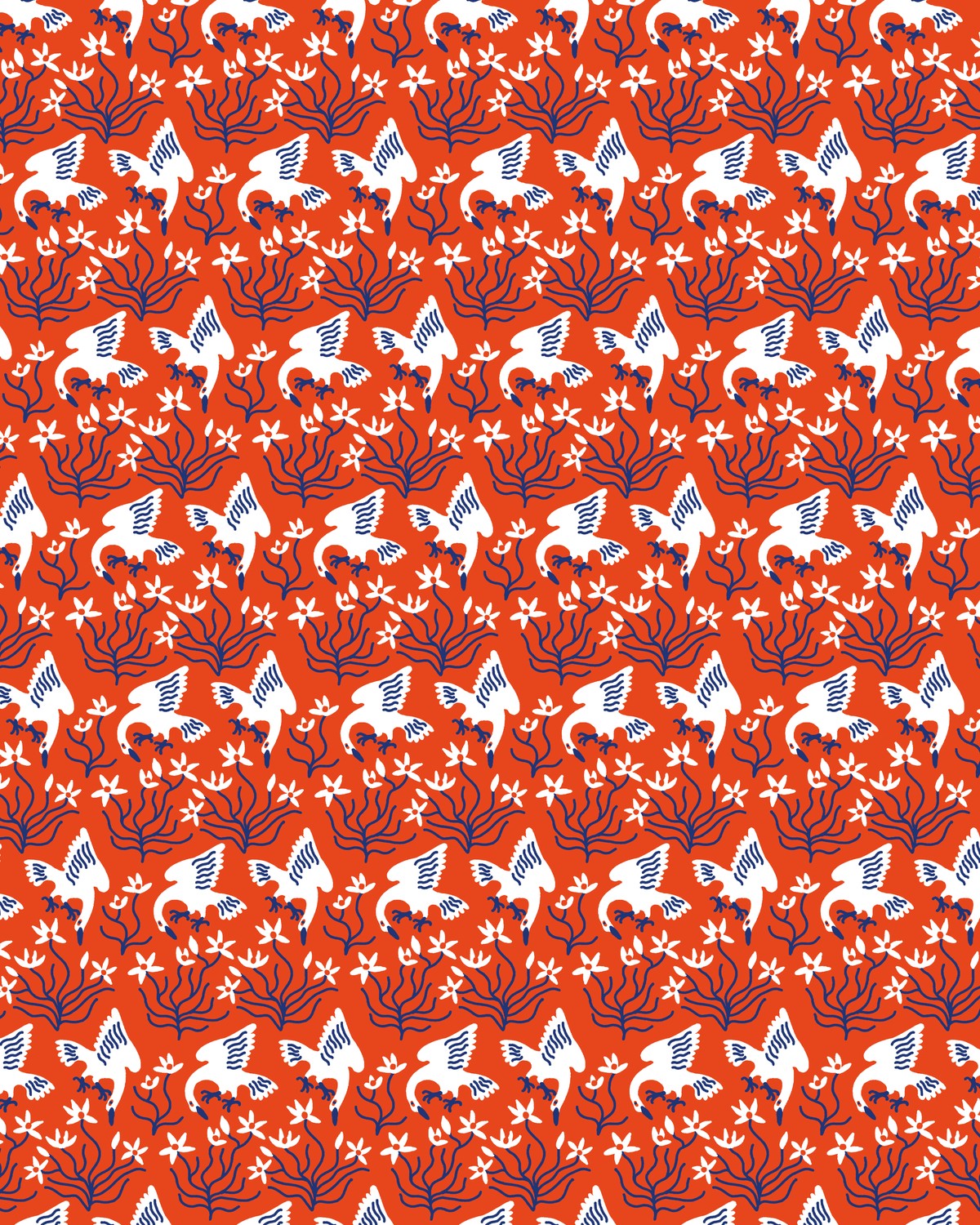
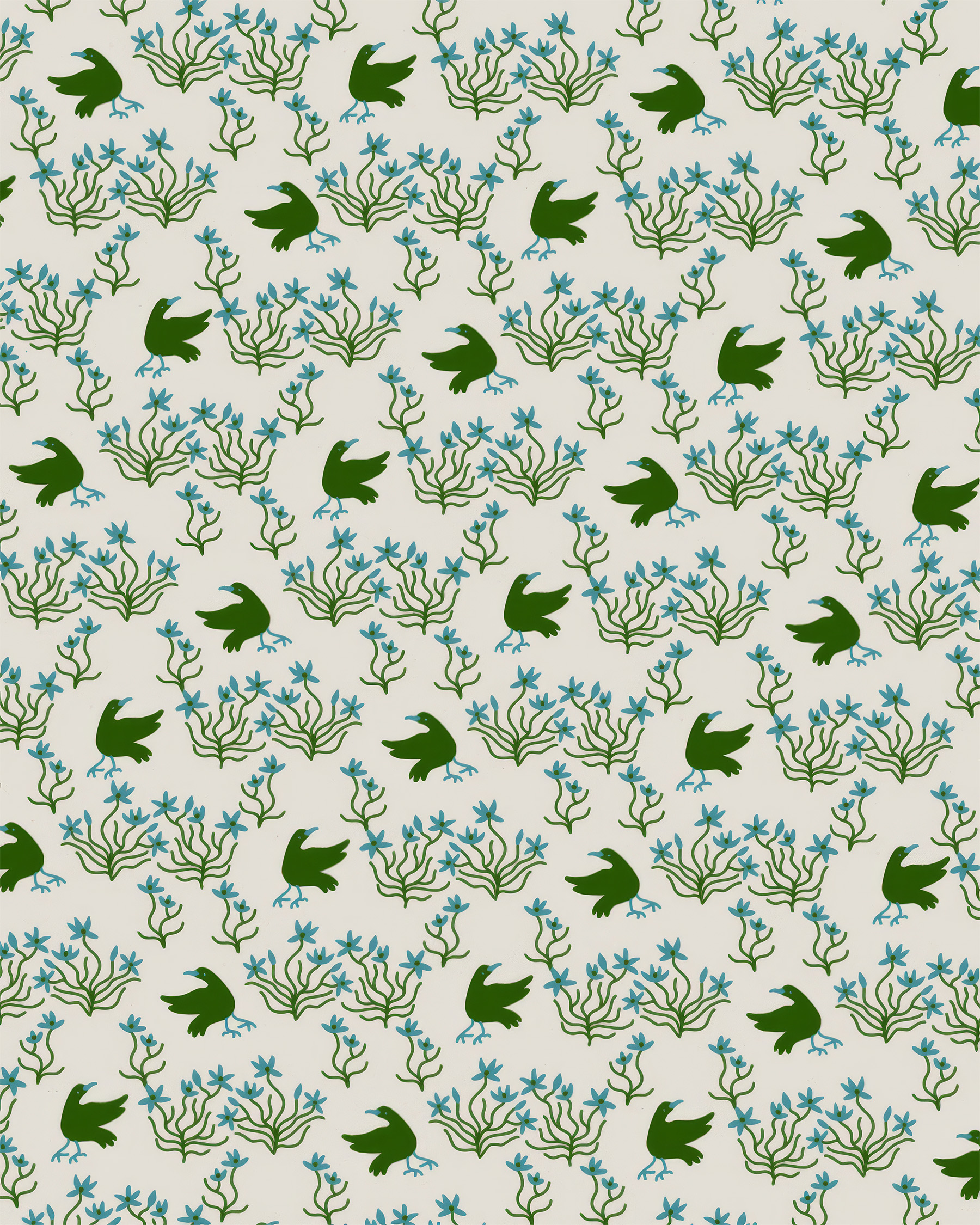
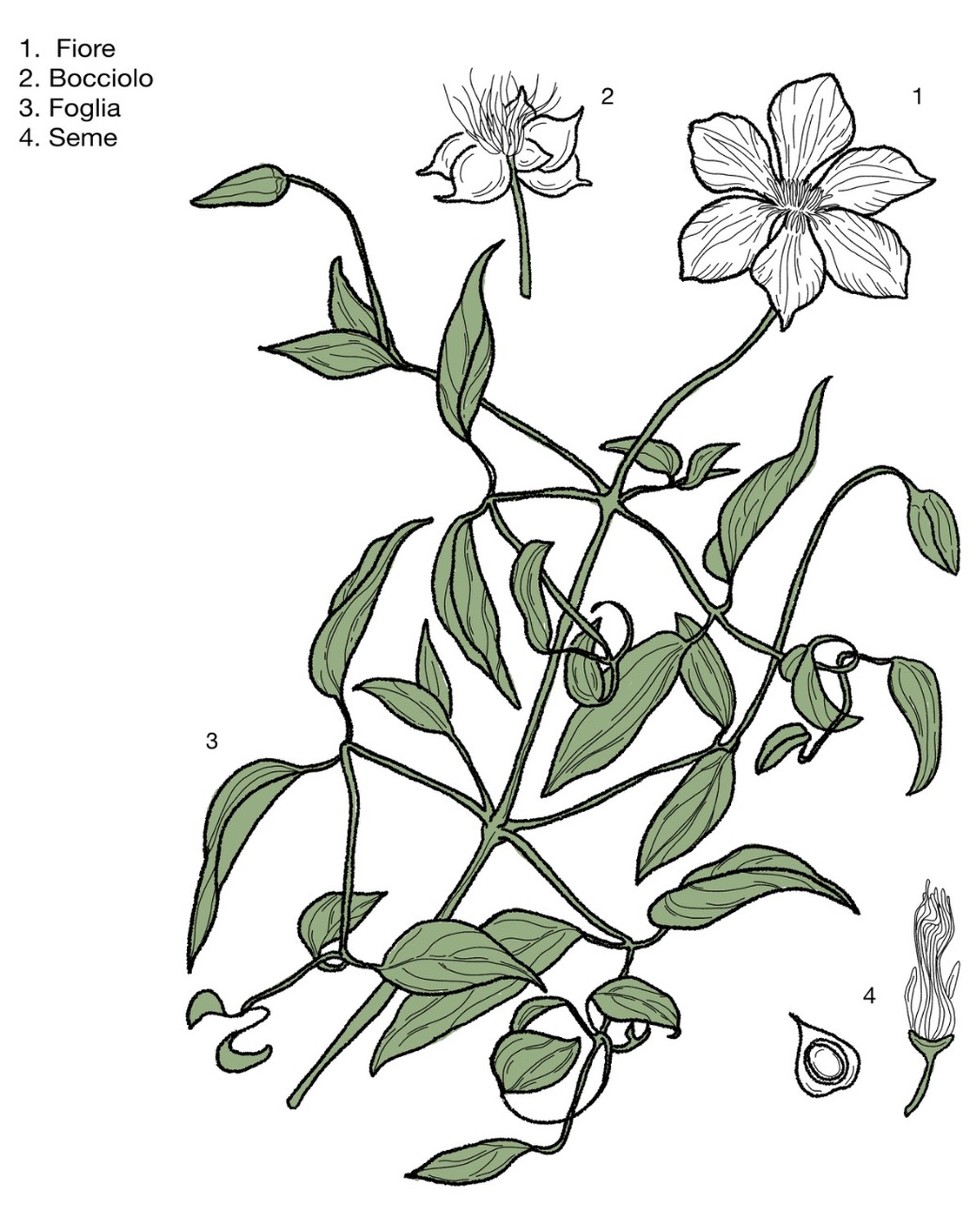
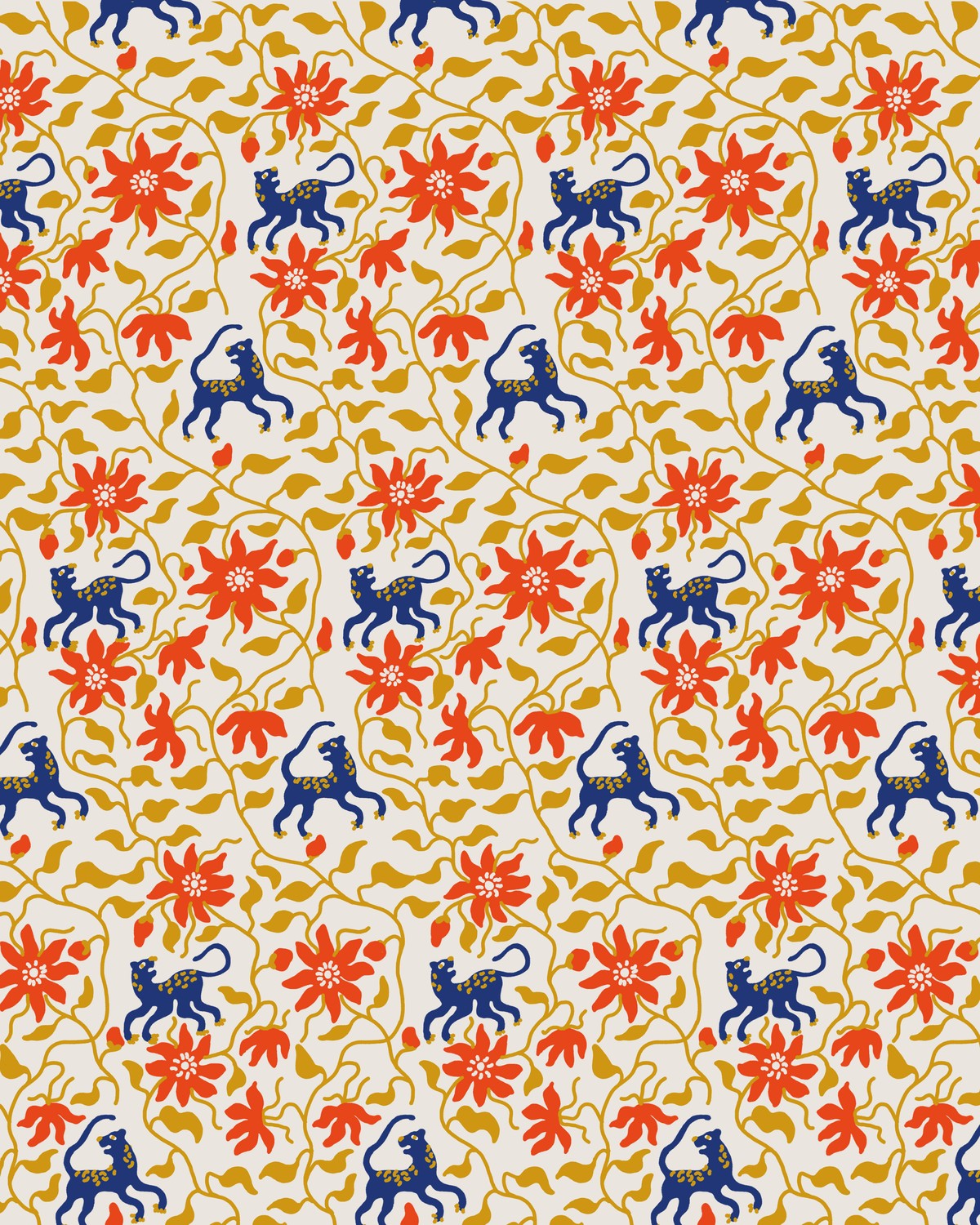
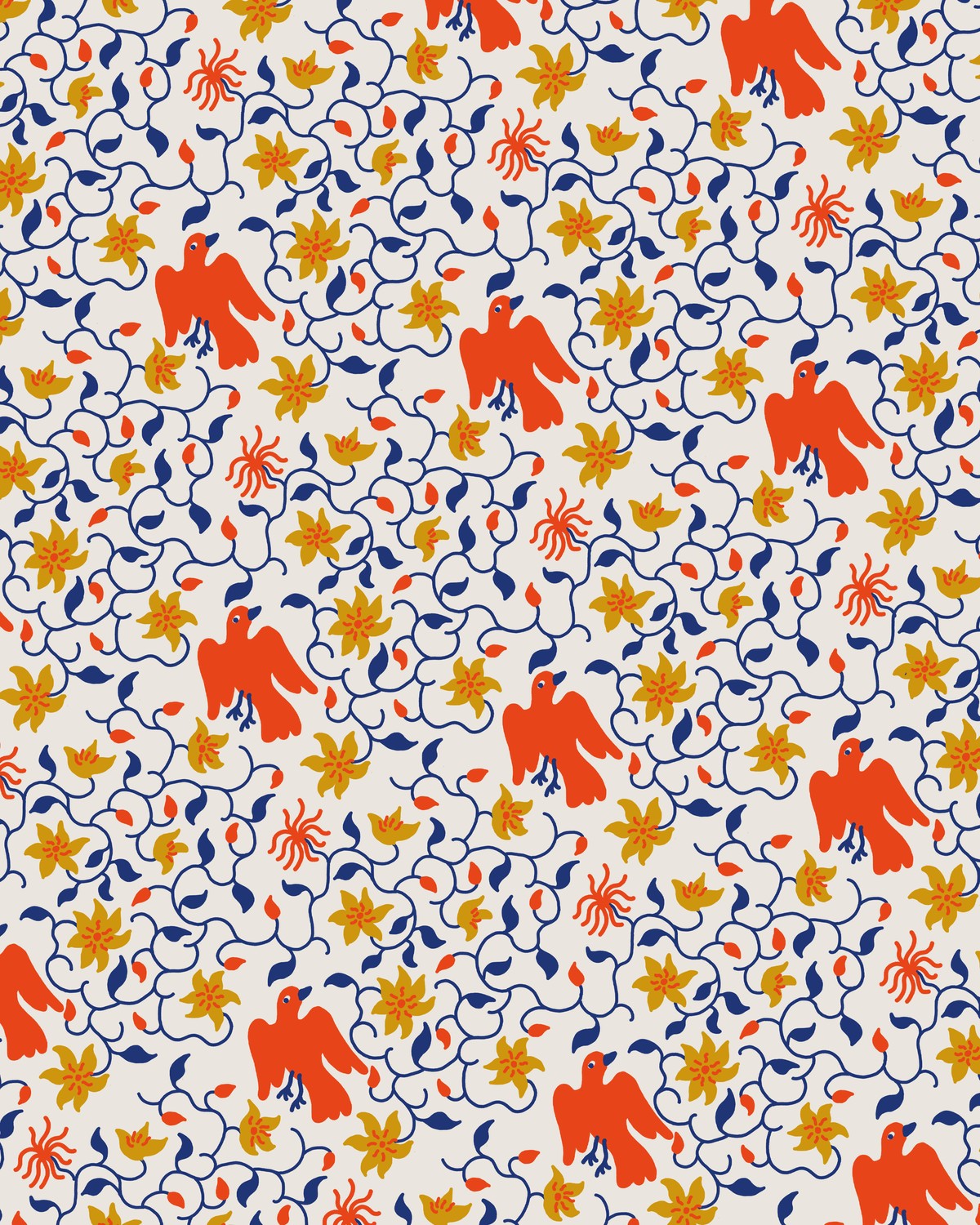
Pianta rampicante dai grandi fiori vistosi, la clematide è da secoli associata in Italia alla gioia e al buon auspicio: la sua capacità di aggrapparsi saldamente al sostegno le ha valso anche il nome di “laccio d’amore”, simbolo di sentimenti forti e sinceri. A differenza delle rappresentazioni di specie come l’ortensia o il gelsomino, sconosciute in Europa e giunte attraverso i tessuti orientali, la clematide era già nota nel bacino mediterraneo. La sua presenza nei tessuti lucchesi si nota in particolare nei lampassi di ispirazione ilkhanide, con una struttura modulare morbida e ariosa.
Nella reinterpretazione di Margherita Tofanelli, la sinuosità del tralcio diventa la struttura stessa del pattern: in una prima versione un unico tralcio ondulato si sviluppa in verticale, punteggiato da grandi fiori a sei petali e accompagnato da un felino che si muove lungo lo stesso percorso curvilineo. In una seconda variante la pianta si arricchisce dei frutti piumosi della clematide, il fiore si fa più piccolo, e il modulo si ripete per traslazione su una griglia a losanghe: il risultato è una composizione più compatta e arrotondata, dove al felino si sostituisce un uccello.
Climbing plant with large, showy flowers, clematis has for centuries been associated in Italy with joy and good fortune: its ability to cling firmly to its support earned it the name “love knot” (laccio d’amore), a symbol of strong, sincere feelings. Unlike species such as hydrangea or jasmine, unknown in Europe and introduced through Eastern textiles, clematis was already known in the Mediterranean basin. Its presence in Lucca’s textiles is particularly notable in the Ilkhanid-inspired lampas, with a soft, airy modular structure.
In Margherita Tofanelli’s reinterpretation, the sinuous tendril becomes the very structure of the pattern: in a first version, a single undulating tendril develops vertically, punctuated by large six-petalled flowers and accompanied by a feline moving along the same curving path. In a second variant, the plant is enriched with the feathery seed heads of the clematis, the flower becomes smaller, and the module repeats by translation across a diamond grid: the result is a more compact, rounded composition, where the feline is replaced by a bird.
Laboratori e attività
Workshops and activities
Durante la mostra è possibile partecipare a laboratori e attività pensati per sperimentare da vicino la logica dei pattern.
During the exhibition, join workshops and activities exploring the logic of patterns.