03.
Dal frammento al pattern
From fragment to pattern
La decorazione di un tessuto nasce dall’unione di scelte estetiche con il vincolo tecnico della tessitura. Il telaio impone fasce, ripetizioni, un ritmo che si ripete a intervalli regolari, una regola che chi tesse deve rispettare prima ancora di poter comporre. È proprio in questo margine ristretto, tra ciò che la tecnica permette e ciò che l’occhio desidera, che nasce la bellezza del tessuto: il limite non impoverisce il disegno, lo costringe a trovare la propria essenza.
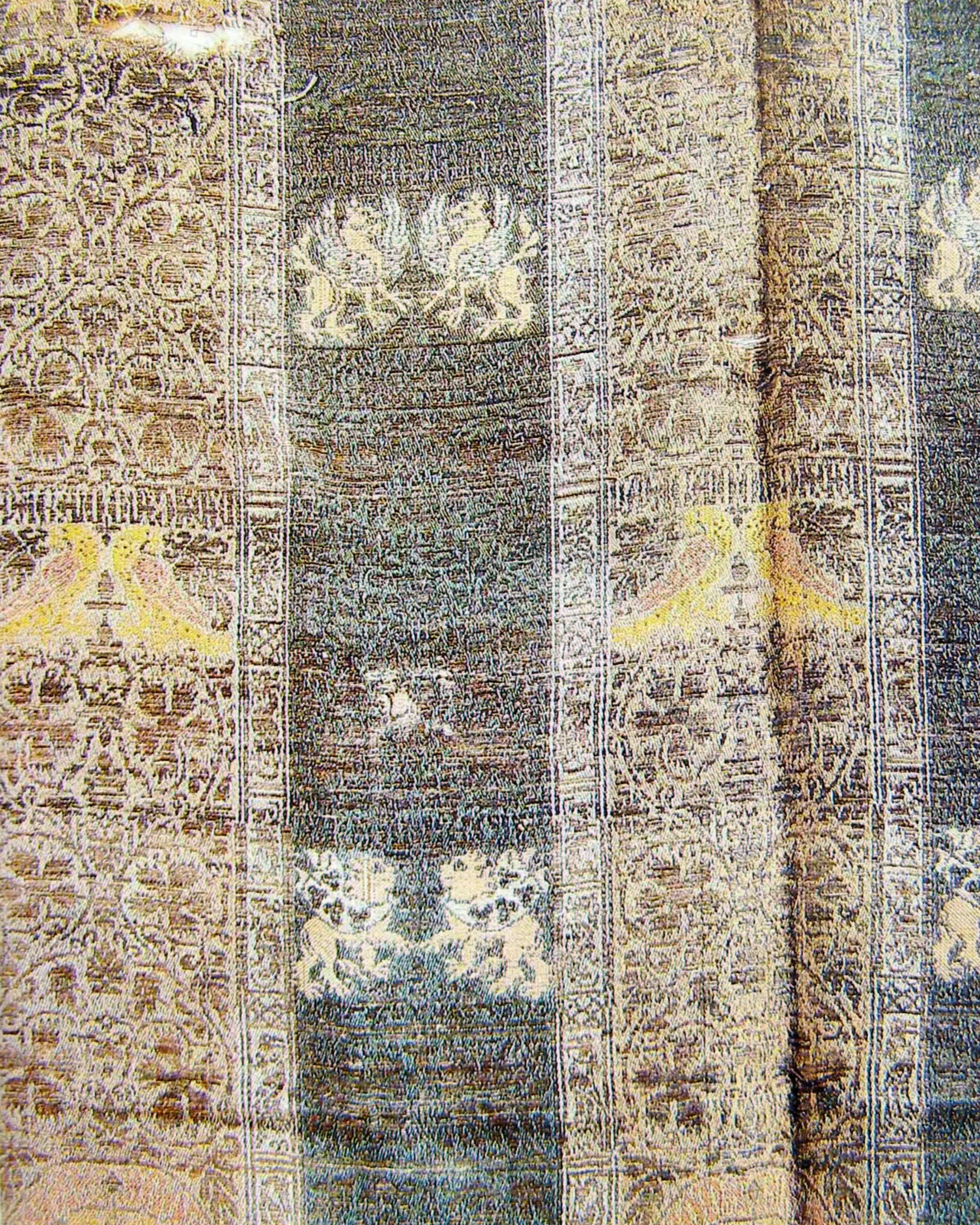
La tovaglia d’altare del XIV secolo conservata in museo mostra bene questo doppio registro. Nelle fasce laterali, un reticolo a losanghe riduce una forma vegetale alla sua essenza geometrica; nella fascia centrale, la stessa scena dell’Annunciazione si ripete più volte, un modulo figurato che si moltiplica lungo la superficie secondo la stessa logica della decorazione ornamentale. Decorazione narrativa e decorazione astratta obbediscono, in questo tessuto, alla stessa regola di fondo.
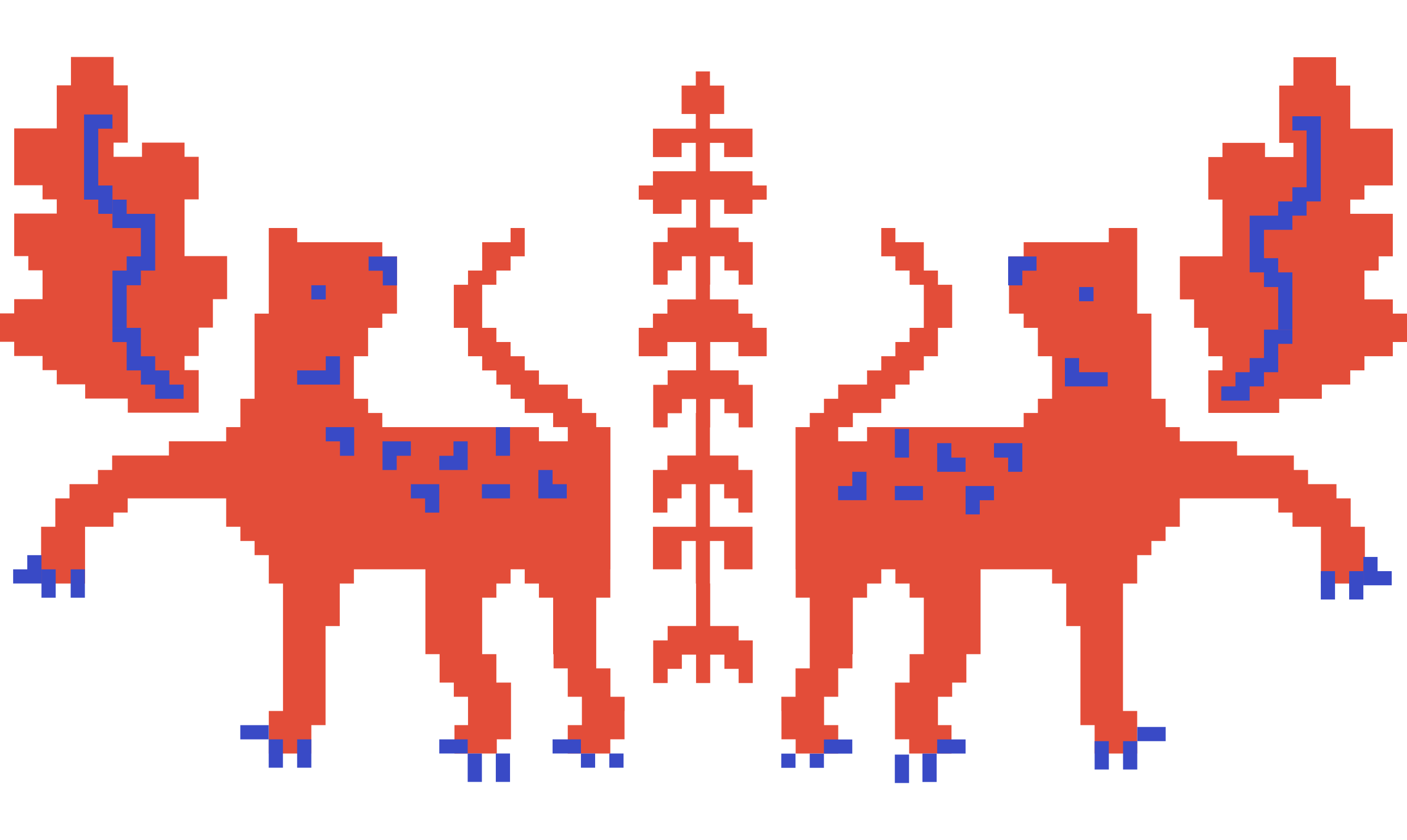
È una regola che attraversa secoli di produzione tessile, dalle sete medievali fino a quelle rinascimentali e oltre: un elemento, il modulo, che si ripete, si specchia, si moltiplica fino a organizzare l’intera superficie. Studiare un tessuto storico significa scomporlo fino a isolare quel modulo, e osservare come si comporta quando viene ripetuto, specchiato, ruotato: un’analisi che rivela la regola nascosta dietro la decorazione, e che apre la strada alla sua ricostruzione in chiave contemporanea.
Giardini Tessuti nasce esattamente da questo esercizio di lettura. Ogni pattern della collezione parte dall’analisi di un motivo decorativo storico e dei suoi soggetti, per poi reinterpretarli in forma contemporanea e tradurli in un nuovo sistema modulare.
Nel corso del XIII e XIV secolo la produzione lucchese sviluppa tipologie decorative distinte, ciascuna con una propria struttura compositiva e un proprio repertorio di soggetti. Conoscerle significa affinare lo sguardo: non limitarsi a riconoscere “un motivo decorativo”, ma capire a quale famiglia appartiene, quali vincoli tecnici lo generano, quale rapporto intrattiene con le altre produzioni tessili del Mediterraneo e dell’Oriente.
The decoration of a textile arises from the union of aesthetic choices with the technical constraints of weaving. The loom imposes bands, repetitions, a rhythm that recurs at regular intervals, a rule that the weaver must respect before composition can even begin. It is precisely within this narrow margin, between what the technique allows and what the eye desires, that the beauty of the textile is born: the constraint does not impoverish the design, it forces it to find its own essence.
The fourteenth-century altar cloth preserved in the museum illustrates this double register well. In the side bands, a diamond lattice reduces a plant form to its geometric essence; in the central band, the same scene of the Annunciation repeats several times, a figurative module multiplied across the surface according to the same logic as the ornamental decoration. Narrative decoration and abstract decoration, in this textile, obey the same underlying rule.
It is a rule that runs through centuries of textile production, from medieval silks to Renaissance ones and beyond: an element, the module, that repeats, mirrors, and multiplies until it organises the entire surface. To study a historical textile means breaking it down until that module is isolated, and observing how it behaves when repeated, mirrored, rotated: an analysis that reveals the hidden rule behind the decoration, and that opens the way to its reconstruction in a contemporary key.
Giardini Tessuti was born exactly from this exercise in reading. Each pattern in the collection starts from the analysis of a historical decorative motif and its subjects, before reinterpreting them in contemporary form and translating them into a new modular system.
Over the course of the thirteenth and fourteenth centuries, Lucca’s production developed distinct decorative typologies, each with its own compositional structure and its own repertoire of subjects. Understanding them means refining the eye: not merely recognising “a decorative motif”, but understanding which family it belongs to, which technical constraints generate it, and what relationship it holds with the other textile productions of the Mediterranean and the East.

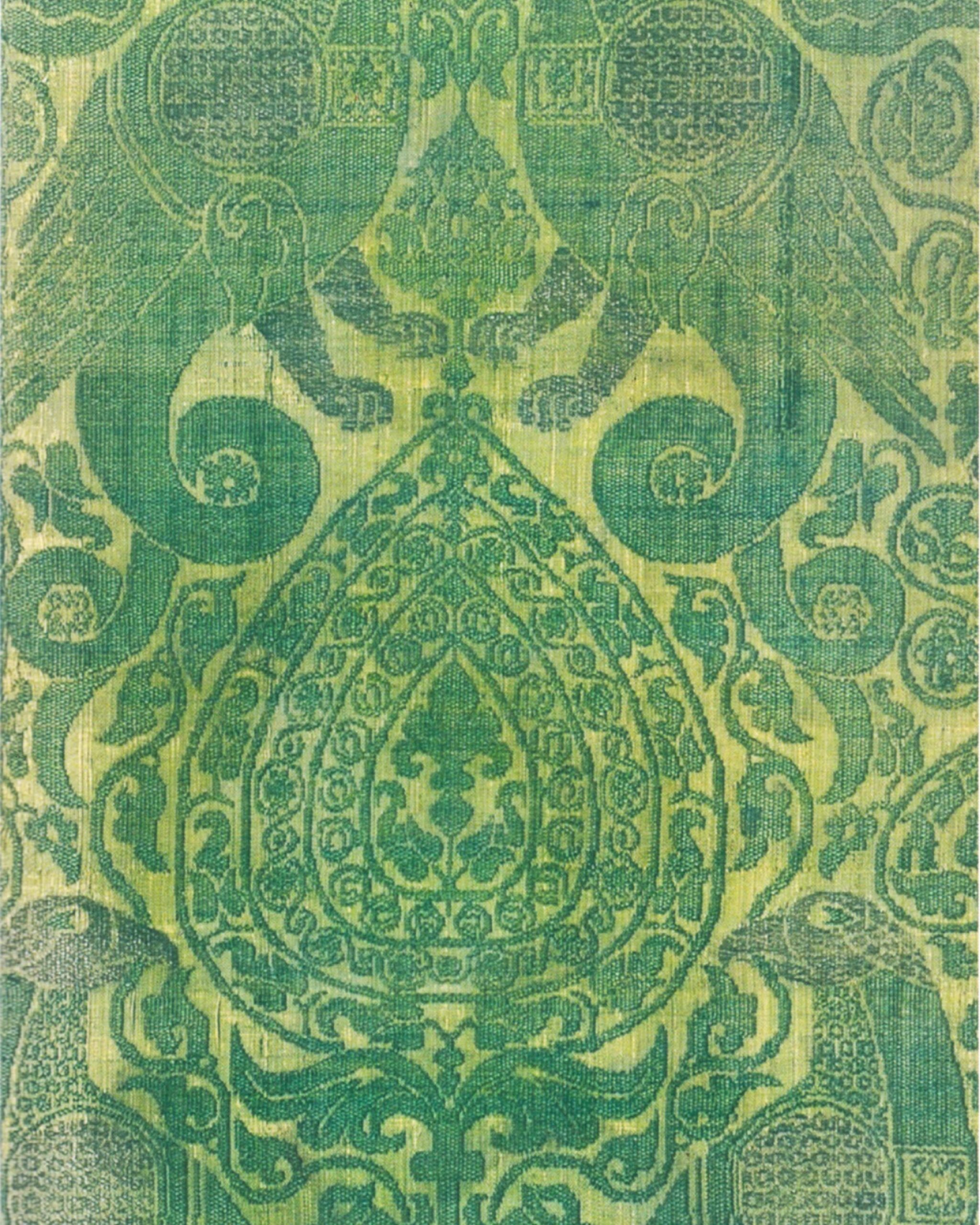
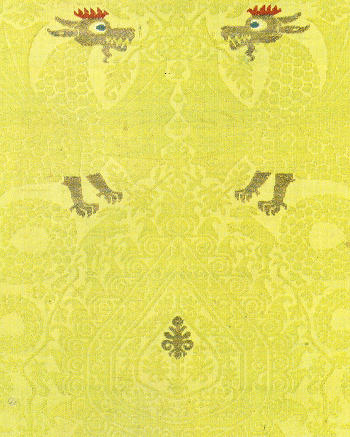
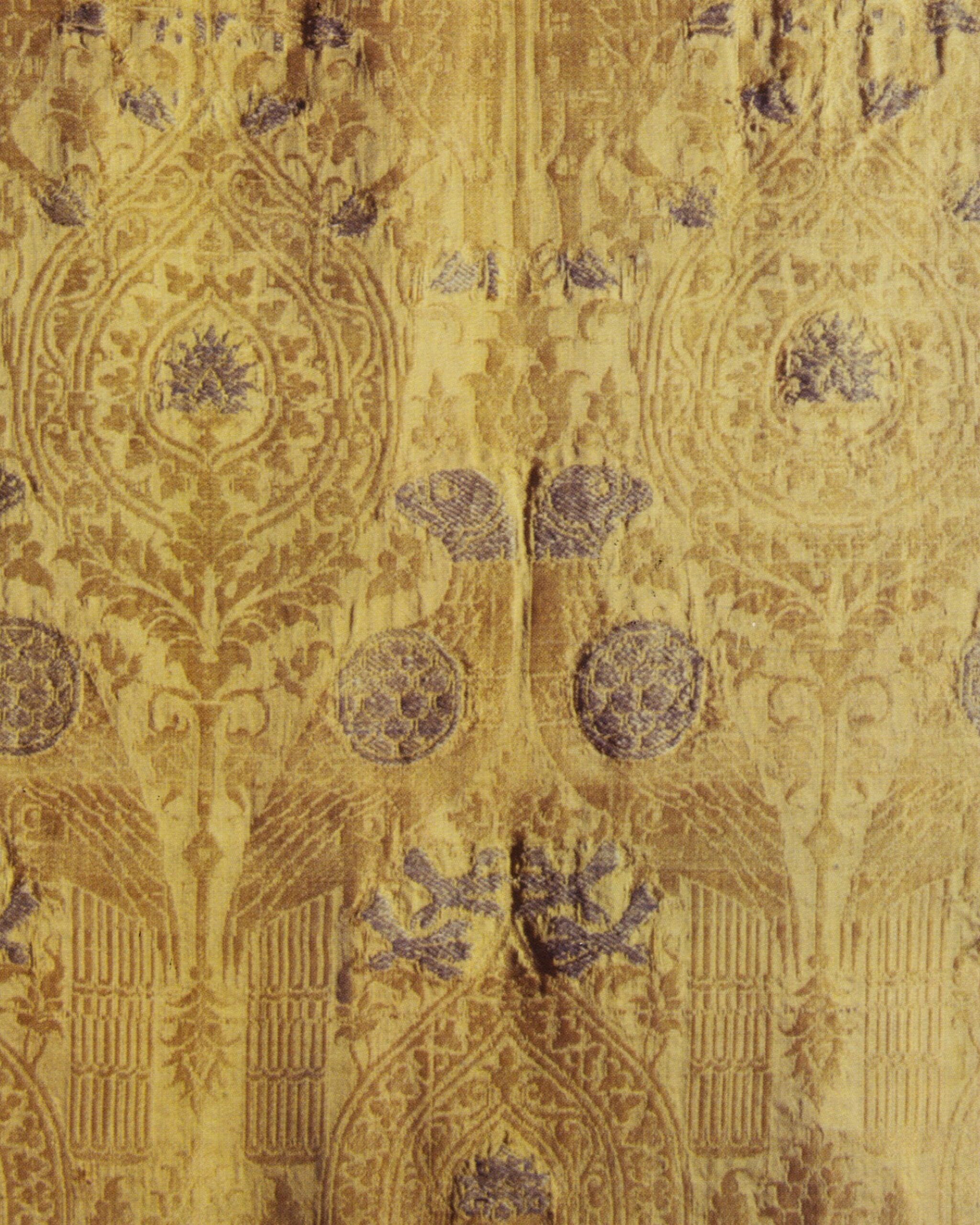
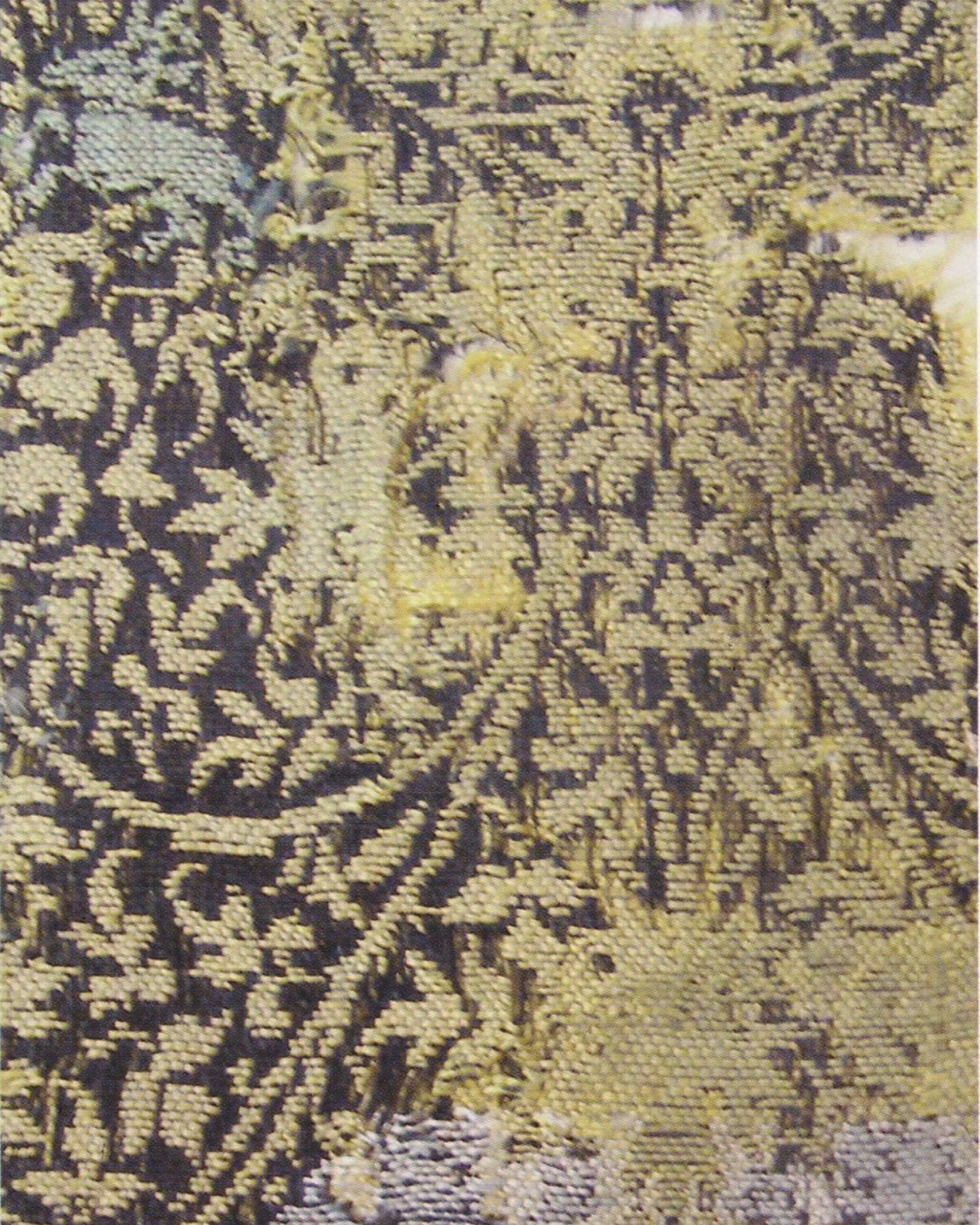
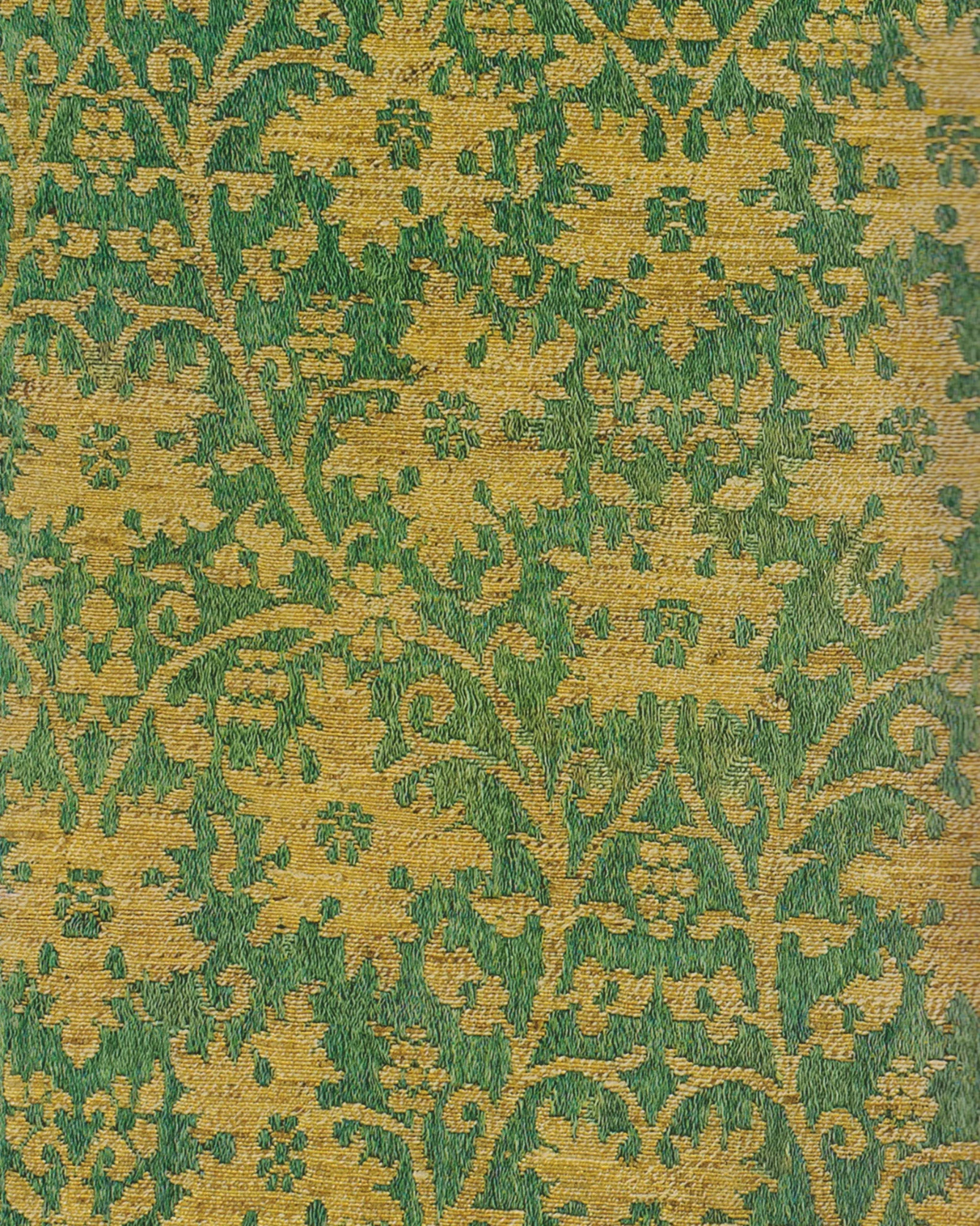
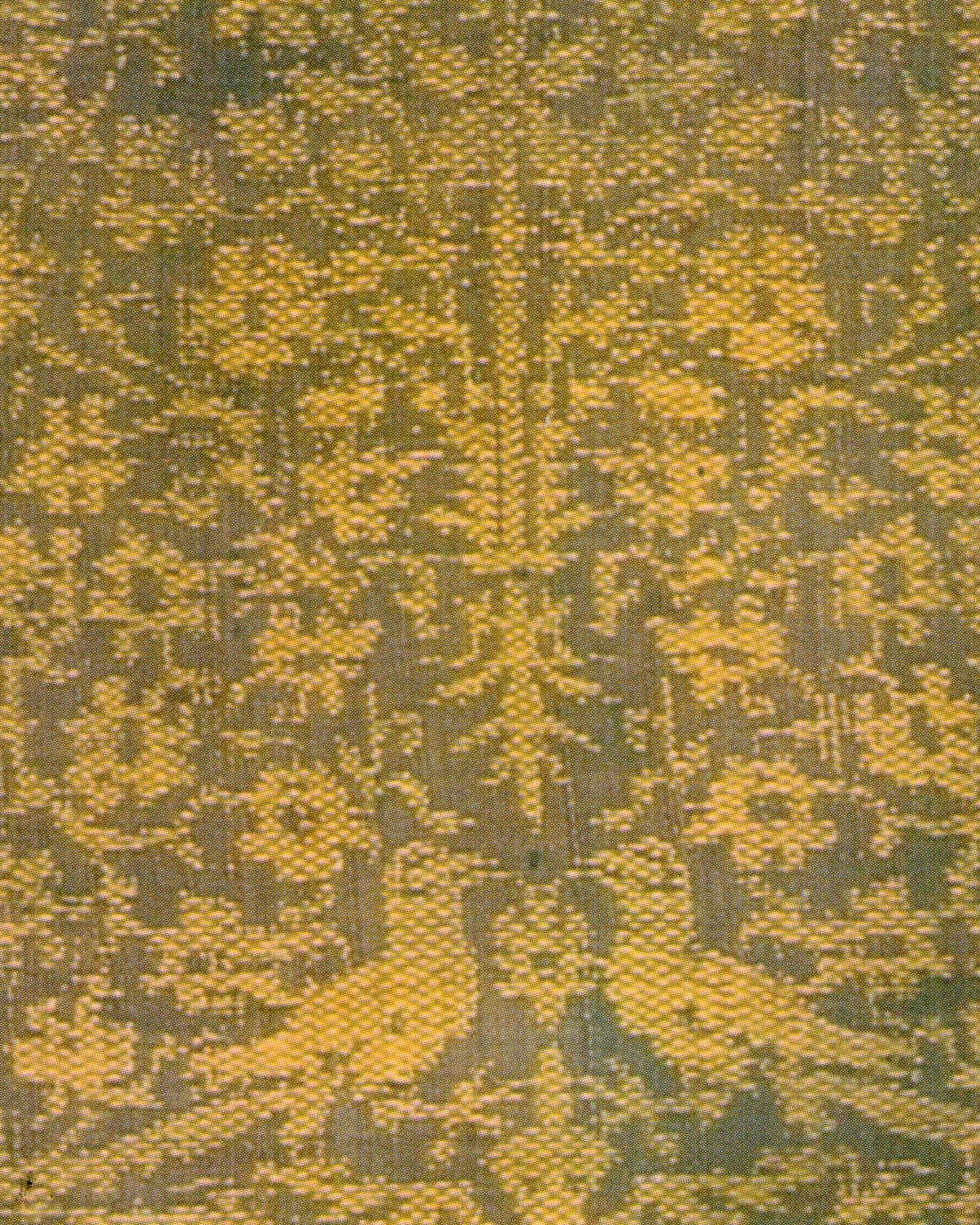
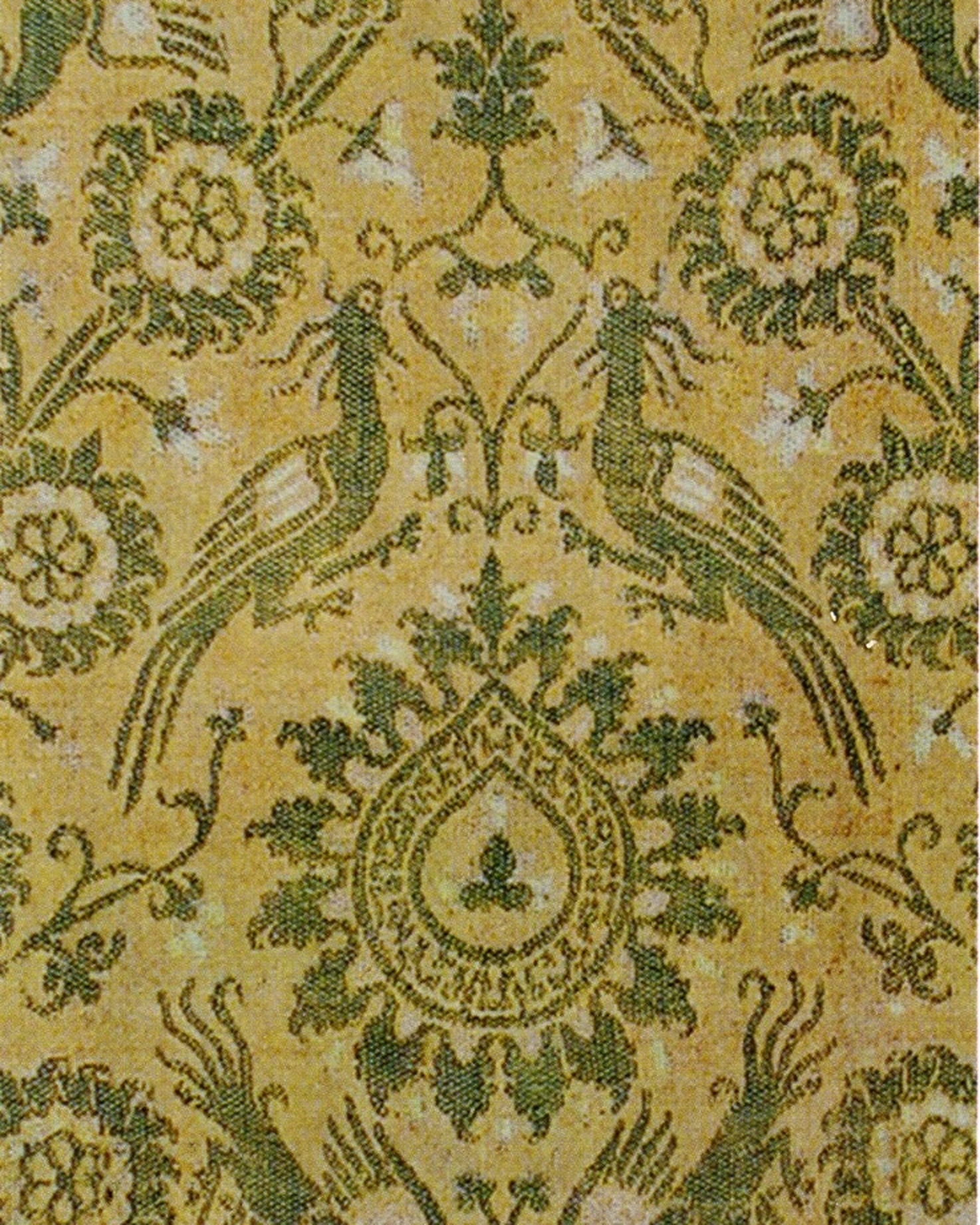
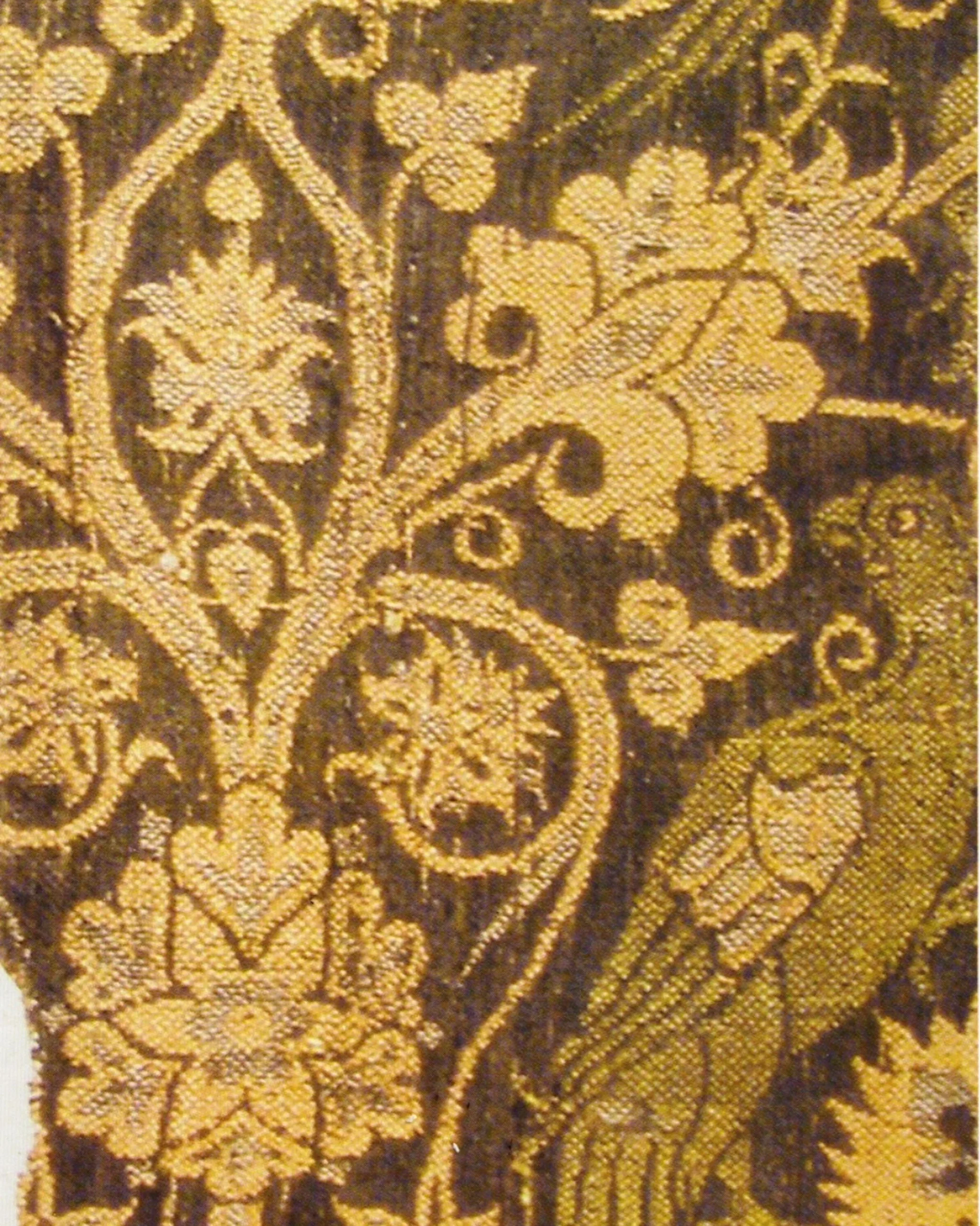
Tra le tipologie più antiche e ricercate della manifattura lucchese, i diaspri si riconoscono per il doppio tono cromatico e per la tessitura a lampasso, una tecnica che alterna fondo e figura mantenendo un’unica gamma di colore, giocata sulle variazioni di lucentezza. La decorazione si organizza attorno a medaglioni vegetali a goccia, entro i quali coppie di animali araldici si dispongono con un rigore simmetrico che richiama direttamente il linguaggio araldico: qui il modulo non è libero, ma racchiuso, quasi incorniciato, e la sua ripetizione genera un ritmo ordinato e monumentale.
Among the oldest and most sought-after typologies of Lucca’s manufacturing, diaspers are recognisable by their two-tone colouring and by lampas weaving, a technique that produces a figured textile in which a ground weave is overlaid by a warp binding supplementary wefts. The decoration is organised around teardrop-shaped vegetal medallions, within which pairs of heraldic animals are arranged with a symmetrical rigour directly recalling heraldic language: here the module is not free but enclosed, almost framed, and its repetition generates an ordered, monumental rhythm.


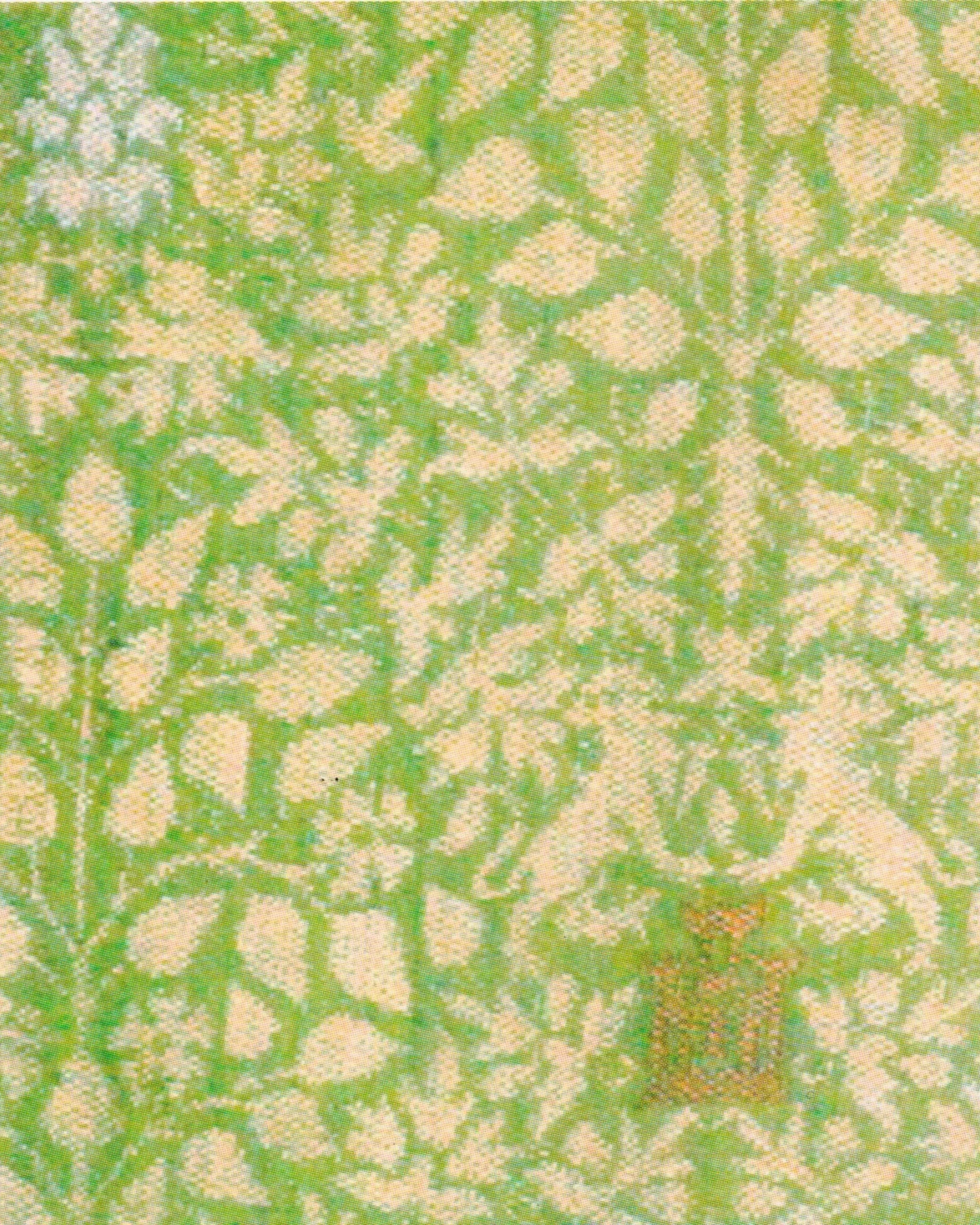
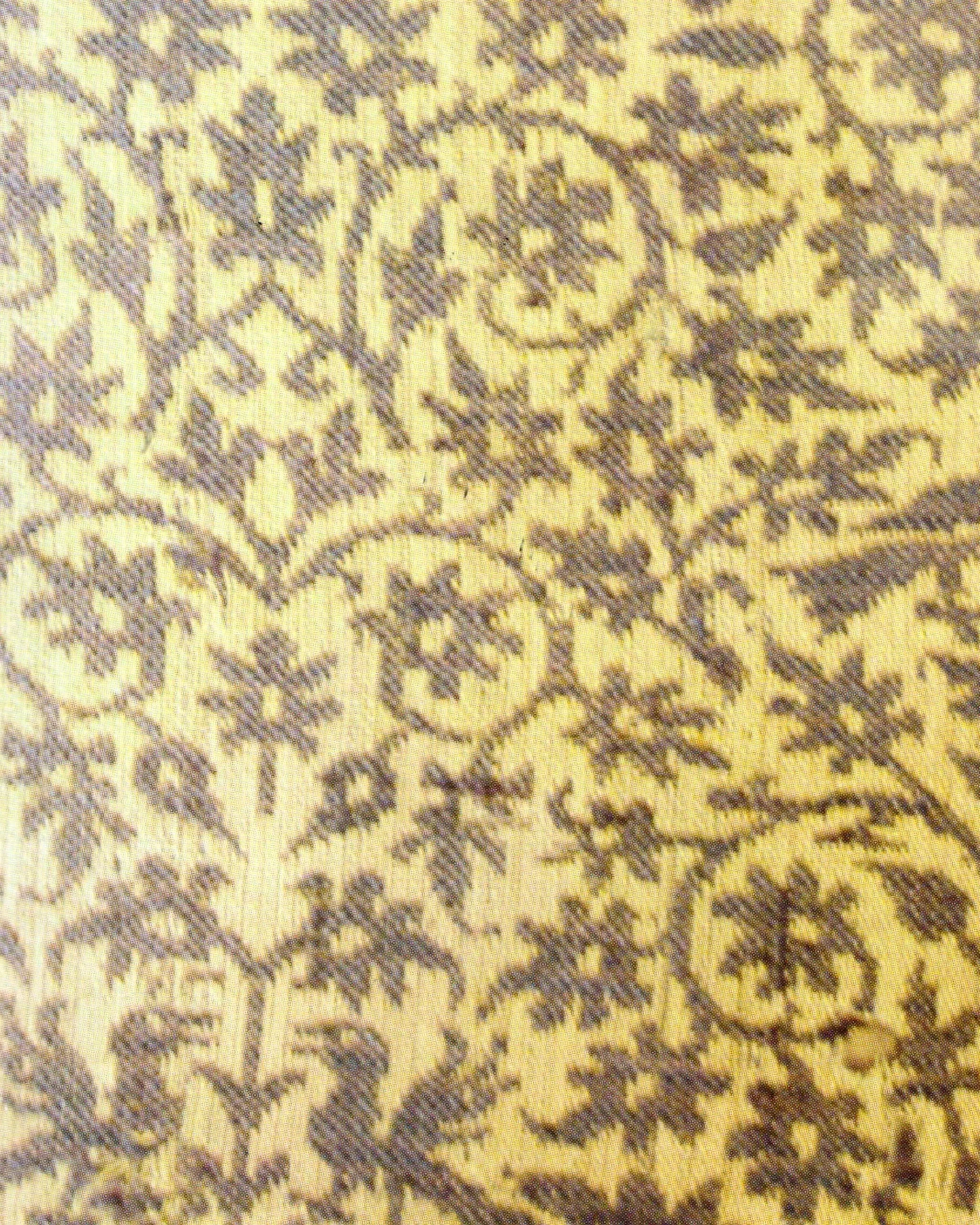
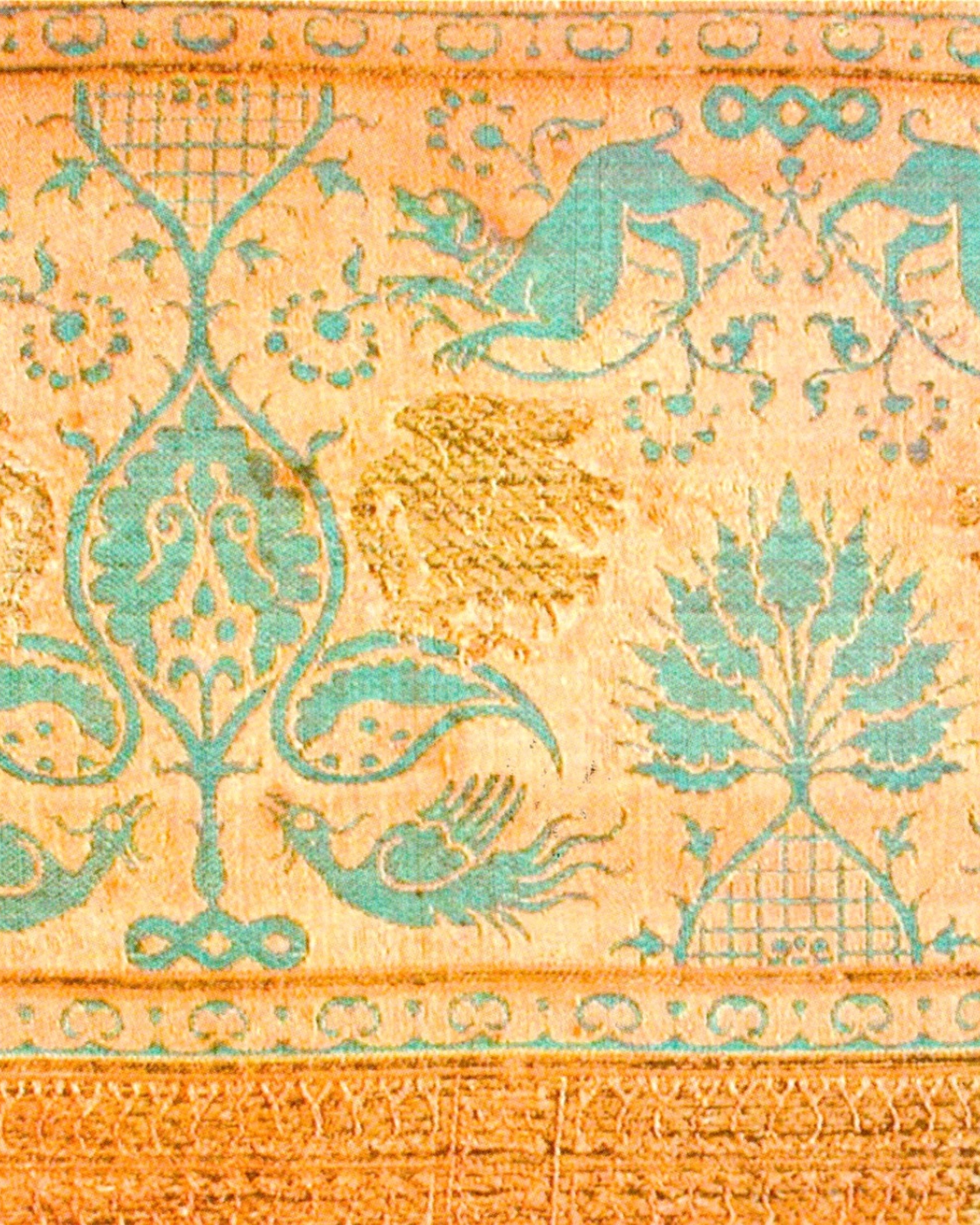
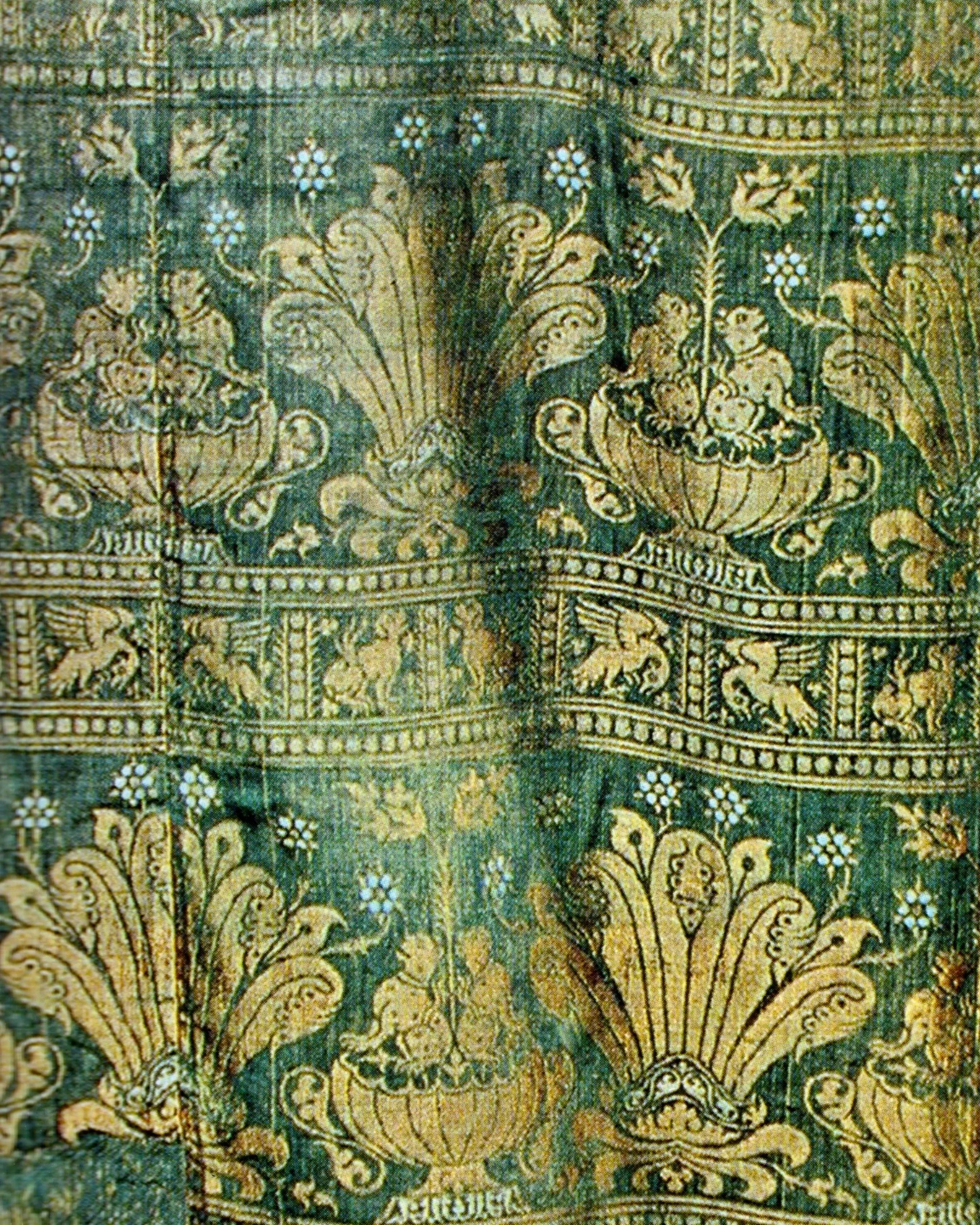
Diversa è la logica dei lampassi a piccoli motivi, dove la superficie si riempie di una trama fitta di elementi botanici e piccole figure animali, senza gerarchia visiva tra un soggetto e l’altro. Il risultato è una superficie vibrante e omogenea, erede diretta della tradizione islamica dell’horror vacui, il rifiuto del vuoto che porta a occupare ogni spazio disponibile. Qui il modulo si fa minuto e si moltiplica fittamente, piuttosto che organizzarsi attorno a un centro.
The logic of small-motif lampas is different: the surface fills with a dense weave of botanical elements and small animal figures, with no visual hierarchy between one subject and another. The result is a vibrant, homogeneous surface, a direct heir to the Islamic tradition of horror vacui, the rejection of empty space that leads to filling every available area. Here the module becomes minute and multiplies densely, rather than organising itself around a centre.


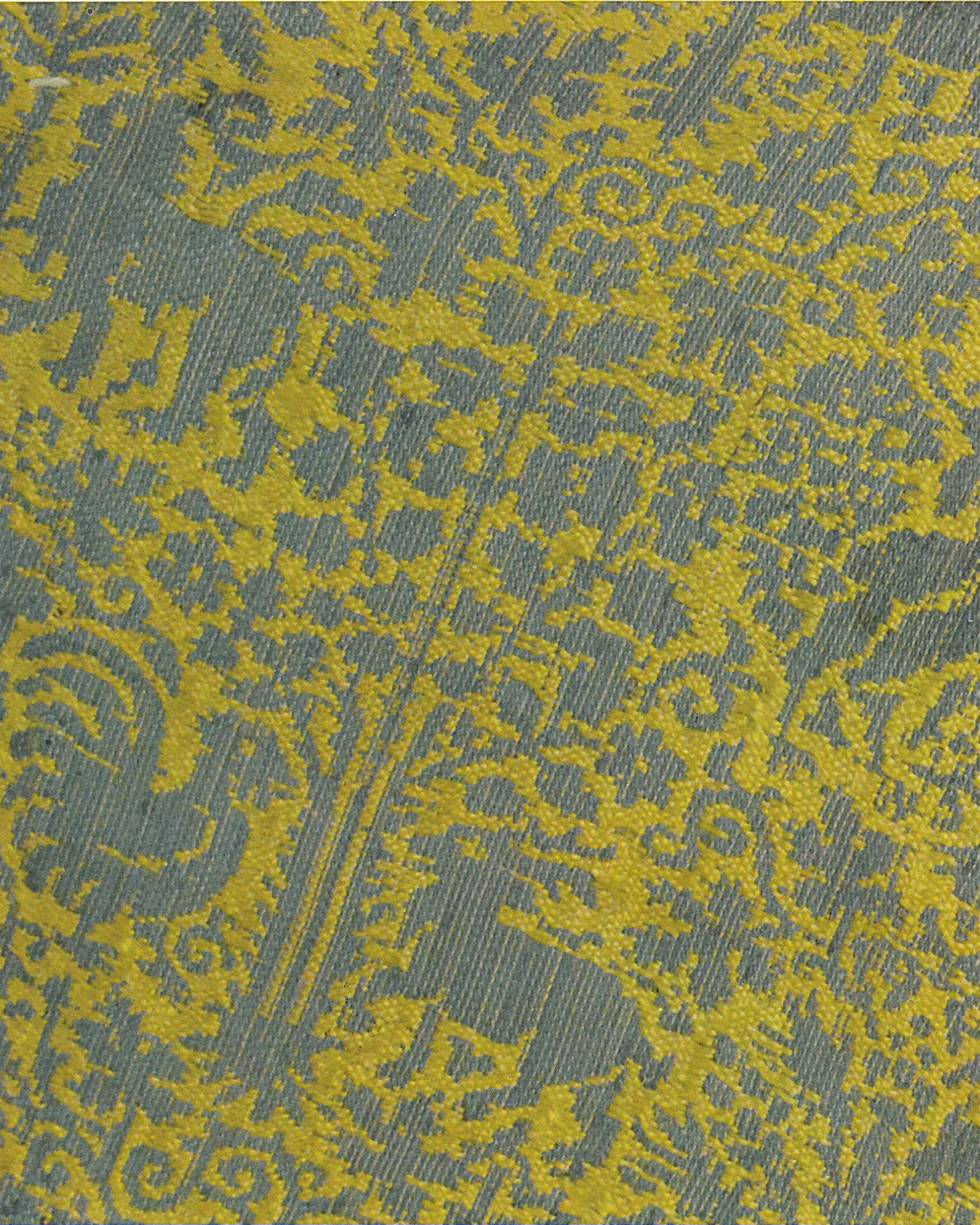
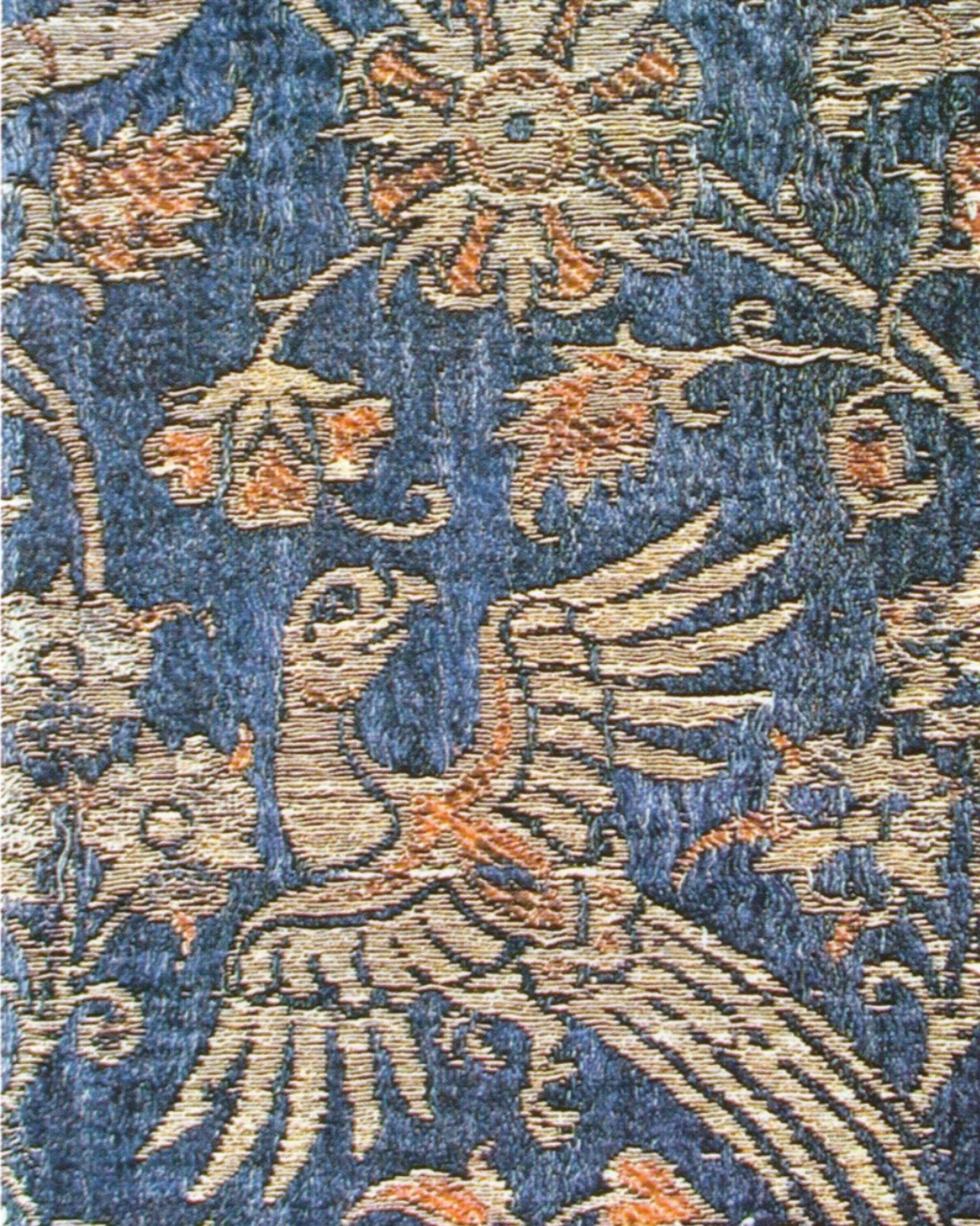
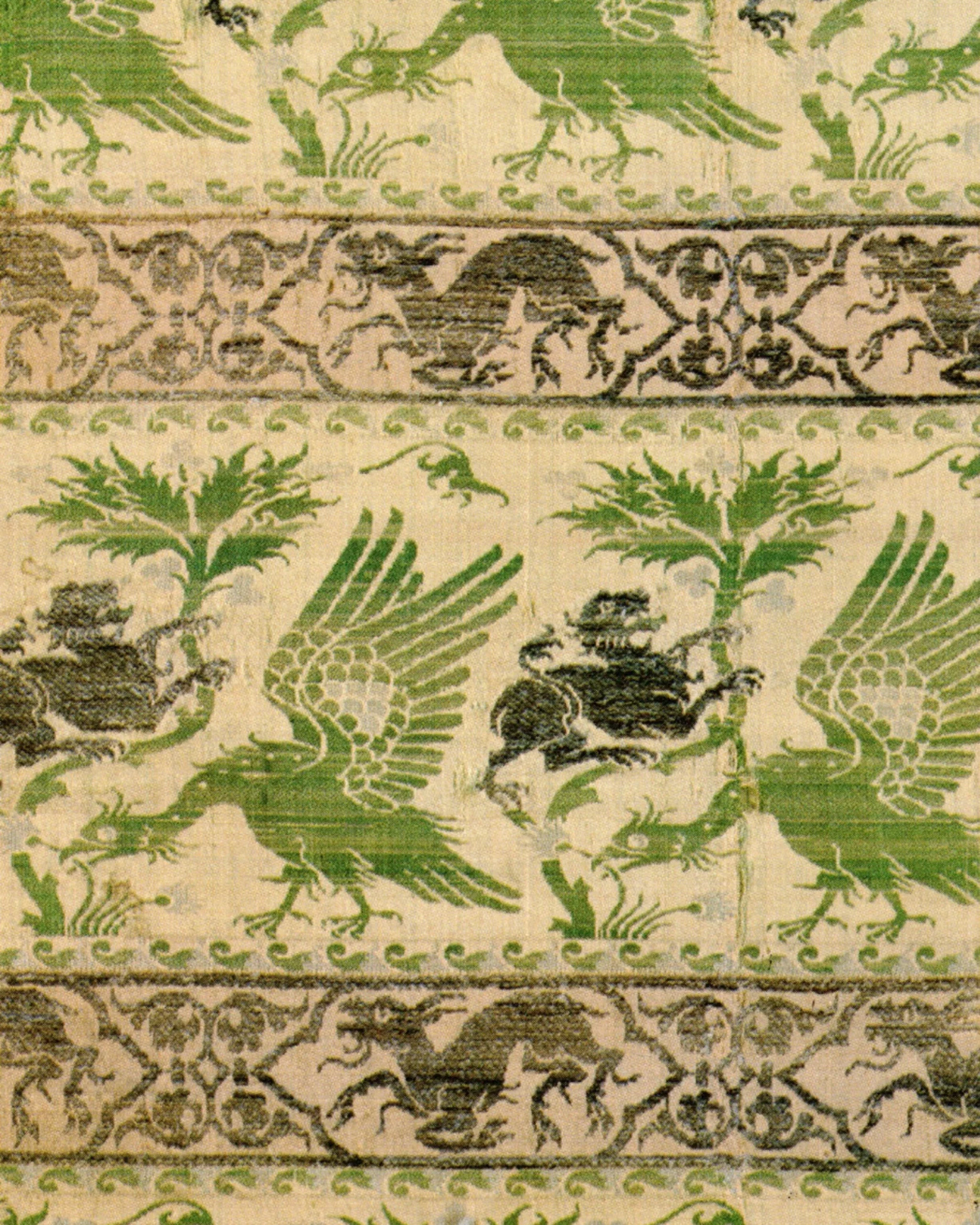
I lampassi di ispirazione ilkhanide raccontano un capitolo preciso di scambio culturale: caratterizzati da tralci ondulati e morbidi, popolati da creature alate fantastiche, riflettono il dialogo diretto tra i mercanti lucchesi e le manifatture tessili dell’Oriente mongolo, tra Iran, Iraq e Anatolia. In queste sete il modulo perde rigidità geometrica e si piega a un andamento sinuoso, quasi calligrafico.
Ilkhanid-inspired lampas textiles tell a specific chapter of cultural exchange: characterised by soft, undulating tendrils populated by fantastical winged creatures, they reflect the direct dialogue between Lucca’s merchants and the textile manufactures of the Mongol East, across Iran, Iraq and Anatolia. In these silks the module loses geometric rigidity and bends into a sinuous, almost calligraphic movement.


I lampassi di ispirazione ilkhanide raccontano un capitolo preciso di scambio culturale: caratterizzati da tralci ondulati e morbidi, popolati da creature alate fantastiche, riflettono il dialogo diretto tra i mercanti lucchesi e le manifatture tessili dell’Oriente mongolo, tra Iran, Iraq e Anatolia. In queste sete il modulo perde rigidità geometrica e si piega a un andamento sinuoso, quasi calligrafico.
Ilkhanid-inspired lampas textiles tell a specific chapter of cultural exchange: characterised by soft, undulating tendrils populated by fantastical winged creatures, they reflect the direct dialogue between Lucca’s merchants and the textile manufactures of the Mongol East, across Iran, Iraq and Anatolia. In these silks the module loses geometric rigidity and bends into a sinuous, almost calligraphic movement.